
For millions of people around the world, tea isn’t an occasional drink.
It’s part of everyday life.
A cup of black tea in the morning. Green tea in the afternoon. Perhaps an herbal infusion in the evening.
But what actually happens when you drink tea every day?
Tea is often associated with antioxidants, hydration, focus, and other potential health benefits. But the value of a daily tea habit may extend beyond nutrition. Preparing tea can also create a pause in the day, establish a comforting routine, and encourage us to pay closer attention to everyday experiences.
In this guide, we’ll explore the potential benefits of drinking tea every day, the role of caffeine and L-theanine, and why the simple ritual of making tea can become a meaningful part of daily life.
Quick answer: Drinking unsweetened tea every day can contribute to hydration and provide beneficial plant compounds such as polyphenols. Depending on the tea, it may also provide caffeine and L-theanine. The effects vary by tea type, brewing method, quantity consumed, and individual health needs.
Quick Navigation
What Happens When You Drink Tea Every Day?
There is no single answer because not all tea is the same.
True teas, including:
- Green tea
- Black tea
- White tea
- Oolong tea
- Pu-erh tea
all come from the Camellia sinensis plant.
The differences between them largely result from how the leaves are harvested and processed.
Herbal teas, such as chamomile and peppermint, come from different plants and have their own unique properties.
If you drink true tea regularly, you may be adding polyphenols and other naturally occurring plant compounds to your diet. Depending on the tea and how it is brewed, you may also consume caffeine and the amino acid L-theanine.
But drinking tea every day can influence more than what you consume.
It can also influence how you structure your day.
1. Tea Provides Naturally Occurring Plant Compounds
One of the main reasons tea has attracted so much scientific interest is its naturally occurring polyphenols.
Tea contains different types and concentrations of these compounds depending on the tea variety and processing method.
Green tea is particularly associated with catechins, while black tea contains compounds formed during oxidation, including theaflavins and thearubigins.
These compounds are often discussed for their antioxidant properties and continue to be studied for their potential role in health.
However, tea should not be treated as a miracle drink.
A daily cup of tea is best understood as one part of an overall pattern of eating, drinking, movement, sleep, and other lifestyle habits.
2. Tea Can Provide a Different Caffeine Experience Than Coffee
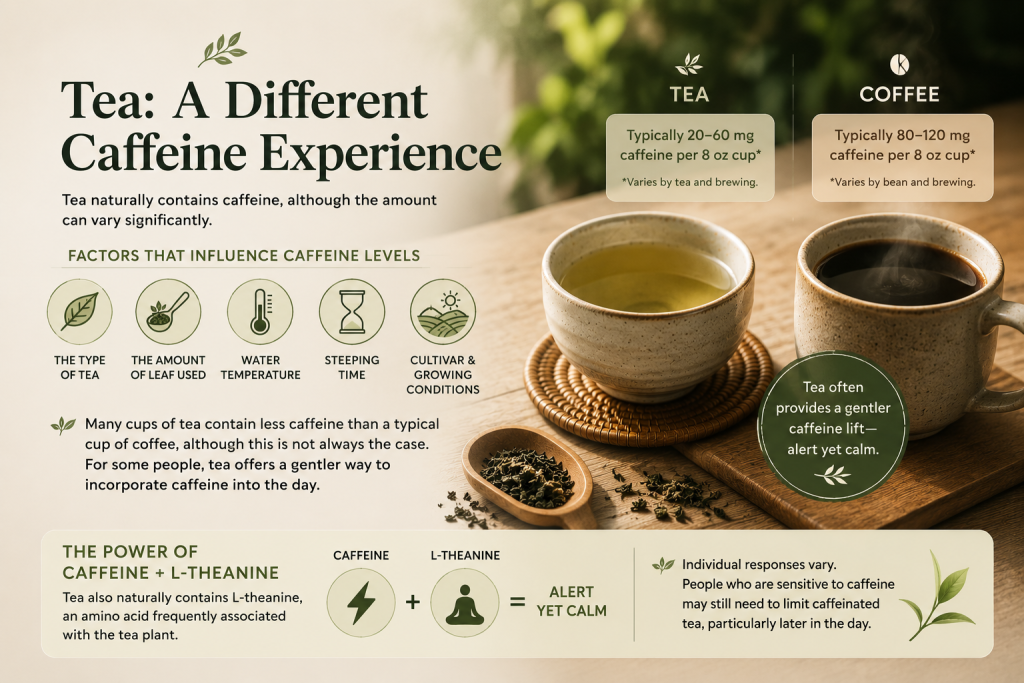
Tea naturally contains caffeine, although the amount can vary significantly.
Factors that influence caffeine levels include:
- The type of tea
- The amount of leaf used
- Water temperature
- Steeping time
- The specific tea cultivar and growing conditions
Many cups of tea contain less caffeine than a typical cup of coffee, although this is not always the case.
For some people, tea offers a gentler way to incorporate caffeine into the day.
Tea also naturally contains L-theanine, an amino acid frequently associated with the tea plant. The combination of caffeine and L-theanine is one reason some tea drinkers describe tea as creating a feeling of being alert yet calm.
Individual responses vary, however. People who are sensitive to caffeine may still need to limit caffeinated tea, particularly later in the day.
3. Tea Can Contribute to Daily Hydration
A common misconception is that caffeinated tea doesn’t count toward hydration.
For most people, tea still contributes to daily fluid intake.
That means your morning black tea, afternoon sencha, or cup of oolong can all contribute fluids as part of your day.
Of course, individual needs vary, and tea doesn’t need to replace water entirely. But for people who struggle to drink enough fluids because they find plain water uninteresting, tea can add variety.
Unsweetened iced tea can also provide a refreshing alternative during warmer months.
4. Tea May Replace Less Healthy Beverages
Sometimes the value of adding something to your routine comes partly from what it replaces.
An unsweetened cup of tea might take the place of:
- Soda
- A heavily sweetened coffee drink
- An energy drink
- Another beverage high in added sugar
In this case, the benefit isn’t necessarily that tea possesses some extraordinary power.
It’s simply that choosing unsweetened tea can be a practical way to reduce the consumption of beverages containing large amounts of added sugar.
How you prepare your tea matters.
A plain cup of green tea and a heavily sweetened bottled tea drink are very different beverages.
5. Drinking Tea Every Day Can Develop Your Palate
When you drink tea regularly, you may begin noticing differences that were once easy to miss.
One green tea might taste grassy and fresh.
Another might be sweet and rich in umami.
A black tea may taste malty.
Another may remind you of dried fruit or honey.
An oolong may begin floral and become creamier over several infusions.
The more tea you drink attentively, the more these differences become apparent.
If you’d like to develop this skill, our guide to How to Taste Tea Like a Professional explores how to notice aroma, flavor, mouthfeel, and finish without overcomplicating the experience.
6. A Daily Tea Habit Can Become a Ritual
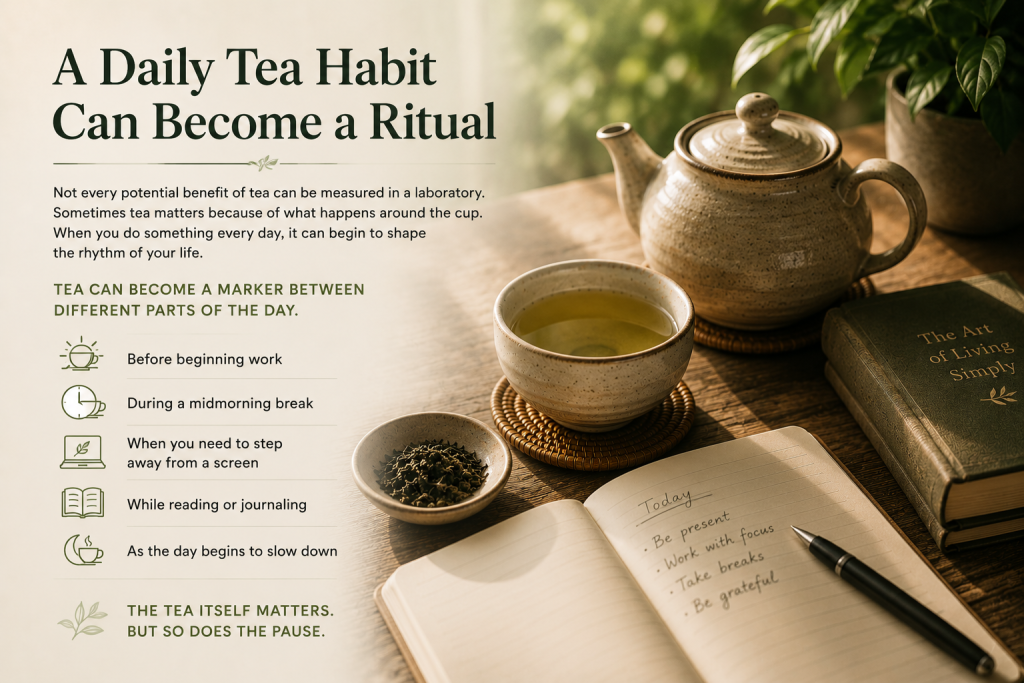
Not every potential benefit of tea can be measured in a laboratory.
Sometimes tea matters because of what happens around the cup.
When you do something every day, it can begin to shape the rhythm of your life.
Tea can become a marker between different parts of the day.
Perhaps you brew tea:
- Before beginning work
- During a midmorning break
- When you need to step away from a screen
- While reading or journaling
- As the day begins to slow down
The tea itself matters.
But so does the pause.
Tea and the Value of a Daily Pause
Modern life makes it remarkably easy to move from one task to another without stopping.
We eat while working.
Drink while driving.
Scroll while watching television.
Check messages while talking to other people.
Tea offers an opportunity to do something different.
You heat the water.
Measure the leaves.
Wait.
Notice the aroma.
Take the first sip.
These actions are simple, but they create a small interruption in the momentum of the day.
A daily tea ritual doesn’t need to be elaborate. You don’t need expensive teaware, rare tea, or thirty uninterrupted minutes.
Sometimes it is simply a cup, a few leaves, hot water, and five quiet minutes.
Can Drinking Tea Every Day Help With Focus?
Many people incorporate tea into work, study, reading, and creative routines.
Part of this may be related to caffeine. Part may be related to the combination of caffeine and L-theanine found naturally in tea.
But context also matters.
The act of preparing tea can create a transition into focused work.
A cup beside a notebook or book can become associated with a particular activity. Over time, the ritual itself may become a signal that it is time to settle in and pay attention.
At TeaMinded, we often explore this relationship between tea and attention.
The cup doesn’t eliminate distraction.
But the ritual can create a moment in which we consciously choose something different.
Is It Safe to Drink Tea Every Day?
For many adults, moderate tea consumption can fit comfortably into a healthy diet.
However, more is not always better.
Important considerations include:
- Caffeine sensitivity: Tea can interfere with sleep or cause unwanted effects in sensitive individuals.
- Added sugar: Heavily sweetened tea can contain substantial amounts of added sugar.
- Iron absorption: Compounds in tea may affect the absorption of non-heme iron, particularly when tea is consumed with meals.
- Medications and health conditions: Some people may need individualized advice about caffeine, fluids, or specific herbal ingredients.
- Very hot beverages: Allowing extremely hot drinks to cool before drinking is a sensible precaution.
If you have a medical condition, take medications, are pregnant, or have specific dietary restrictions, personalized advice from a qualified healthcare professional is appropriate.
How Much Tea Should You Drink Every Day?
There is no universal number of cups that is right for everyone.
Your ideal amount depends on factors such as:
- The type of tea
- How strongly you brew it
- Your total caffeine intake
- Your personal caffeine sensitivity
- Your health needs
- The time of day you drink it
For many people, a few cups spread throughout the day may be enjoyable and manageable.
The goal shouldn’t be to drink as much tea as possible.
The goal is to find an amount that works for you.
What Is the Best Tea to Drink Every Day?
The best everyday tea is often the one you genuinely enjoy and can comfortably incorporate into your routine.
That might be:
Green tea for fresh, vegetal, or umami flavors.
Black tea for a stronger, fuller-bodied cup.
Oolong tea for aromatic complexity and multiple infusions.
White tea for a lighter and often more delicate experience.
Pu-erh tea for earthy depth and a distinctive character.
Herbal tea for a naturally caffeine-free option, depending on the ingredients.
There is no single tea that everyone needs to drink.
Variety can also make a daily tea habit more interesting.
How to Start a Daily Tea Ritual
If you’d like to make tea part of your everyday routine, keep it simple.
Choose one point in the day when tea naturally fits.
Perhaps:
- Brew tea before checking email in the morning.
- Replace one afternoon beverage with unsweetened tea.
- Take ten minutes away from your phone while drinking tea.
- Pair tea with reading or journaling.
- Experiment with one new loose leaf tea each month.
The goal isn’t to create another habit that feels like an obligation.
Tea should remain something you enjoy.
The Reality of Drinking Tea Every Day
Tea is not magic.
Drinking tea every day will not compensate for poor sleep, an unbalanced diet, inactivity, or other factors that influence health.
And no single beverage can guarantee good health.
Perhaps that is one of the most appealing things about tea.
It doesn’t need to promise an overnight transformation.
Tea works more quietly.
One cup at a time.
A daily tea habit may encourage you to drink more fluids.
Consume fewer sugary beverages.
Explore new flavors.
Take a break.
Slow down.
Pay attention.
None of these things seems dramatic on its own.
But repeated every day, small things can become meaningful.

Final Thoughts: Is Drinking Tea Every Day Worth It?
So, what happens when you drink tea every day?
The answer will be different for everyone.
You may discover a beverage you genuinely enjoy.
You may find a different way to consume caffeine.
You may become curious about tea-growing regions, craftsmanship, and traditions around the world.
Or perhaps you simply create one small moment each day when you stop doing everything else and make tea.
That may not sound revolutionary.
But in a world where our attention is constantly being pulled in different directions, perhaps it is.
You don’t need to chase every possible benefit.
You don’t need to turn tea into another part of life to optimize.
Just make a cup.
Pay attention.
And see what happens when a simple ritual becomes part of your everyday life.
Frequently Asked Questions
What happens if you drink tea every day?
Drinking tea every day can contribute to fluid intake and provide naturally occurring plant compounds such as polyphenols. Depending on the tea, it may also provide caffeine and L-theanine. The effects vary depending on the type and amount of tea consumed and the individual.
Is it healthy to drink tea every day?
For many people, moderate consumption of unsweetened tea can be part of a healthy diet. Individual needs vary, particularly for people who are sensitive to caffeine or have specific medical or dietary considerations.
What is the healthiest tea to drink daily?
There is no single healthiest tea for everyone. Green, black, white, oolong, and other teas contain different compounds and offer different flavor profiles. The best choice often depends on your preferences and individual needs.
Does tea count toward daily hydration?
For most people, tea contributes to daily fluid intake, including caffeinated tea when consumed in typical amounts.
Is drinking tea every day better than drinking coffee?
Neither beverage is universally better. Tea and coffee have different caffeine levels, flavors, compounds, and rituals. The better choice depends on your preferences, caffeine tolerance, and overall diet.
Can I drink tea every day if it contains caffeine?
Many people consume caffeinated tea daily, but caffeine sensitivity varies. If tea affects your sleep or causes unwanted symptoms, consider drinking less, brewing it more lightly, or choosing caffeine-free options later in the day.
Listen to the TeaMinded Podcast
This article accompanies Episode 20 of the TeaMinded Podcast: What Happens When You Drink Tea Every Day?
TeaMinded explores tea culture, loose leaf tea, Japanese tea, tea rituals, craftsmanship, mindfulness, and intentional living through the lens of tea.
Listen on Spotify and YouTube, and continue exploring the world of tea at TeaMinded.
Related TeaMinded Articles
- How to Taste Tea Like a Professional
- Why Loose Leaf Tea Costs More (And Why Many Tea Drinkers Think It’s Worth It)
- How Water Changes the Taste of Tea
- The Six Types of Tea Explained
- A Beginner’s Guide to Loose Leaf Tea
- The Craftsmanship Behind a Good Cup of Loose Leaf Tea

Scott is the founder of TeaMinded. He enjoys tasting and discovering teas from across the globe, with green teas and ceremonial matcha from Japan being among his favorites. He’s grateful to be immersed in the tea community, always learning and sharing along the journey.