
Quick Navigation
The Most Important Tea Ingredient You May Be Overlooking
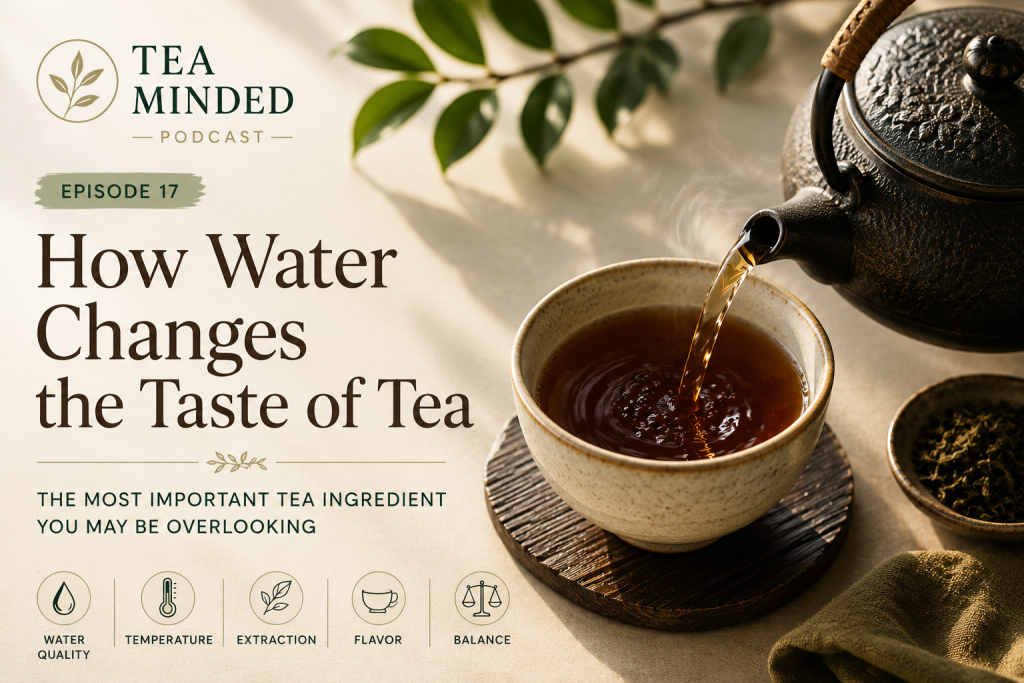
TeaMinded Podcast — Episode 17
Most tea drinkers spend their time focusing on the tea itself.
We search for better loose leaf tea, explore different tea origins, compare tea shops, and experiment with brewing methods.
All of those things matter.
But one of the biggest factors influencing the quality of your tea is often overlooked:
The water.
In fact, a typical cup of tea is more than 98 percent water. Yet many tea drinkers give little thought to the ingredient that makes up nearly the entire cup.
In Episode 17 of the TeaMinded Podcast, we explore how water changes the taste of tea and why tea professionals have long considered water just as important as the leaves themselves.
Why Water Matters in Tea
Tea is an extraction.
When hot water meets tea leaves, thousands of compounds begin dissolving into the water, creating the flavors, aromas, textures, and colors we associate with tea.
The water acts as a bridge between the leaf and your cup.
If the water is poor, even exceptional tea may struggle to reveal its full character.
If the water is balanced and clean, tea often tastes brighter, sweeter, and more expressive.
This is one reason tea masters throughout history paid careful attention to water sources.
Ancient Chinese tea texts often discuss the qualities of different springs, rivers, and mountain waters used for tea preparation.
Hard Water vs Soft Water
One of the most important factors in water is mineral content.
You may have heard the terms:
- Hard water
- Soft water
Hard water contains higher levels of dissolved minerals such as calcium and magnesium.
Soft water contains fewer minerals.
Neither is inherently better, but they interact with tea differently.
Hard Water
Hard water can:
- Reduce perceived sweetness
- Mute delicate aromas
- Diminish subtle flavor notes
- Create a heavier mouthfeel
This can be particularly noticeable when brewing delicate green teas and white teas.
Soft Water
Soft water often:
- Enhances aroma
- Improves clarity
- Highlights sweetness
- Allows subtle flavors to emerge
Many Japanese green teas, including sencha and gyokuro, tend to perform especially well with softer water.
Filtered Water vs Tap Water
Many tea drinkers discover that simply switching to filtered water noticeably improves their tea.
Tap water often contains:
- Chlorine
- Treatment chemicals
- Excess minerals
- Other impurities
These substances can interfere with flavor and aroma.
A simple carbon filter pitcher can often remove enough impurities to create a cleaner, more enjoyable cup.
You do not need expensive specialty water to make better tea.
For most people, filtered water is an excellent starting point.
Water Temperature Matters Too
When discussing water and tea, temperature is equally important.
One of the most common tea brewing mistakes is using boiling water for every type of tea.
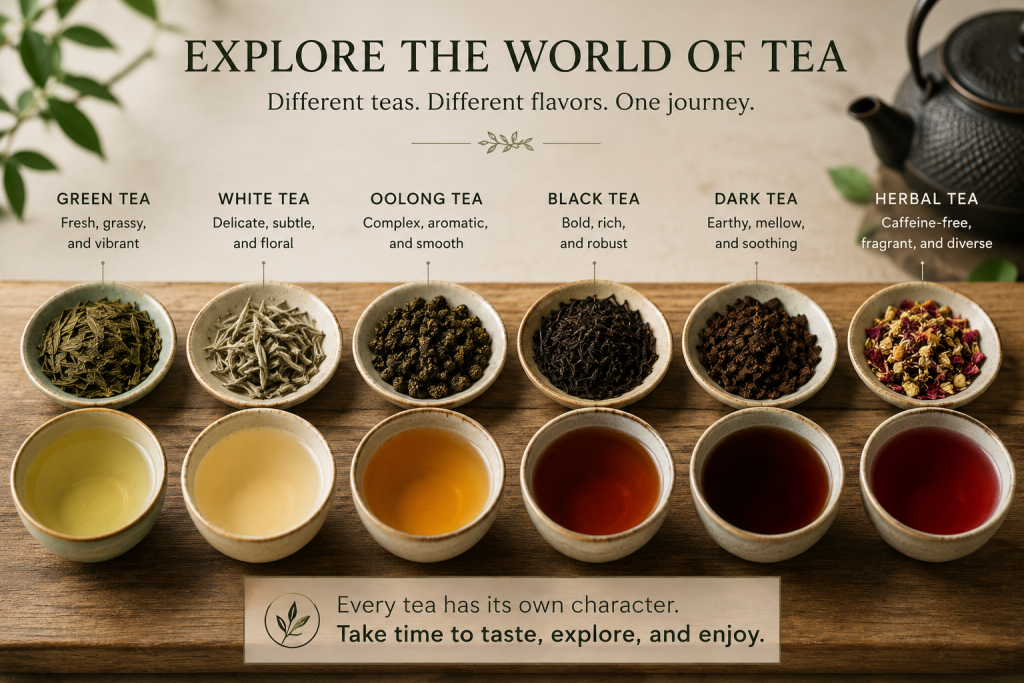
Different teas generally prefer different brewing temperatures.
Green Tea
Typically:
160–180°F (70–82°C)
White Tea
Typically:
170–185°F (77–85°C)
Oolong Tea
Typically:
185–205°F (85–96°C)
Black Tea
Typically:
200–212°F (93–100°C)
Pu-erh Tea
Typically:
205–212°F (96–100°C)
Using water that is too hot can extract excessive bitterness and astringency.
Using water that is too cool can result in a weak or flat cup.
The goal is balance.
Why Tea Tastes Different in Different Places
Have you ever traveled and noticed that your favorite tea tastes different?
The tea itself may not have changed.
The water probably did.
Different regions have different water profiles.
Different municipalities use different treatment processes.
Even homes in the same city can have varying water characteristics depending on plumbing and filtration systems.
This is one reason tea professionals frequently test tea with multiple water sources before evaluating quality.
A Simple Tea Experiment
If you’d like to experience the impact of water for yourself, try this:
- Select a favorite tea.
- Brew one cup with tap water.
- Brew another cup with filtered water.
- Use the same tea, temperature, and steeping time.
- Compare the results side by side.
Pay attention to:
- Aroma
- Sweetness
- Mouthfeel
- Clarity
- Finish
You may be surprised by how much the water changes the experience.
Tea Teaches Attention
At TeaMinded, we often talk about paying attention.
Tea invites us to notice things that might otherwise go overlooked.
Water is one of those things.
Because it is nearly invisible in the brewing process, it is easy to forget how important it is.
Yet it influences nearly every aspect of the finished cup.
Sometimes the most important ingredient is the one we rarely notice.
In This Episode
- Why water matters in tea
- Hard water vs soft water
- Filtered water vs tap water
- Water temperature and tea brewing
- Tea extraction and balance
- Why tea tastes different in different places
- Simple ways to improve tea flavor
- How attention improves the tea experience
Related TeaMinded Articles
- A Beginner’s Guide to Loose Leaf Tea
- Tea Bags vs Loose Leaf Tea
- The Six Types of Tea Explained
- The Craftsmanship Behind a Good Cup of Loose Leaf Tea
Listen to the Episode
Listen on Spotify
Watch on YouTube
About TeaMinded
TeaMinded explores tea culture, loose leaf tea, Japanese tea, tea rituals, mindfulness, craftsmanship, creativity, and intentional living through educational episodes, tea reviews, reflections, and conversations.
Whether you’re just beginning your tea journey or deepening a lifelong appreciation for tea, TeaMinded helps uncover the stories, traditions, and craftsmanship behind every cup.
Frequently Asked Questions
Does water quality affect the taste of tea?
Yes. Water quality significantly influences flavor, aroma, sweetness, mouthfeel, and overall tea enjoyment. The same tea brewed with different water can taste remarkably different.
What is the best water for tea?
Most tea professionals recommend clean, filtered water with moderate mineral content. Extremely hard water can mute delicate flavors, while overly purified water may produce a flat cup.
Is filtered water better than tap water for tea?
In many cases, yes. Filtering water can remove chlorine and impurities that negatively affect tea flavor.
Why does tea taste different when I travel?
Differences in local water composition, mineral content, and treatment methods can change how tea extracts and tastes.

Scott is the founder of TeaMinded. He enjoys tasting and discovering teas from across the globe, with green teas and ceremonial matcha from Japan being among his favorites. He’s grateful to be immersed in the tea community, always learning and sharing along the journey.