
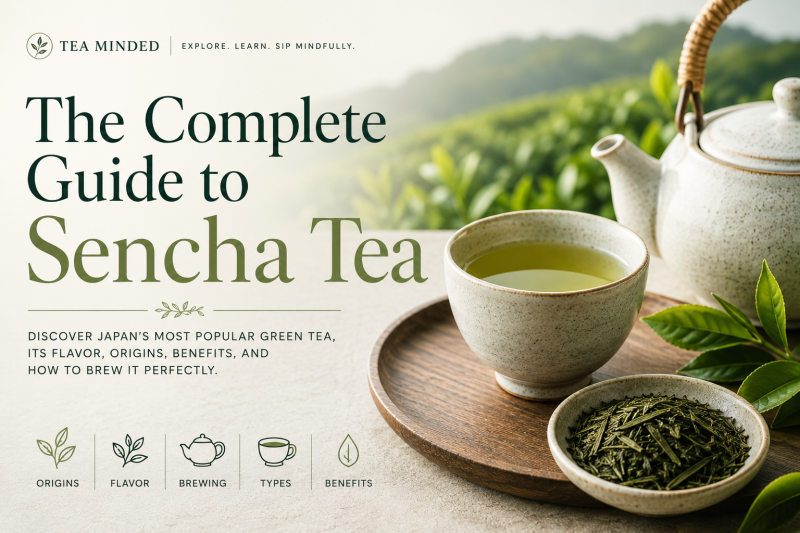
Sencha is the most popular tea in Japan and one of the most widely consumed green teas in the world.
If you’ve explored Japanese tea, you’ve likely encountered sencha. It appears in tea shops, Japanese restaurants, specialty tea retailers, and tea collections of every kind.
Yet many tea drinkers are surprised to discover that sencha is far more diverse than they initially realize.
Different cultivars, harvest seasons, steaming methods, and growing regions can produce dramatically different flavor profiles, ranging from bright and grassy to rich, sweet, and deeply umami.
This guide explores everything you need to know about sencha tea, including its history, production, flavor, brewing methods, and how it compares to other Japanese teas.
Quick Navigation
What Is Sencha Tea?
Sencha is a Japanese green tea made from the leaves of the Camellia sinensis plant.
Unlike many Chinese green teas that are pan-fired, Japanese green teas are typically steamed shortly after harvest to prevent oxidation.
This steaming process helps preserve the tea’s vibrant green color and fresh vegetal character.
Today, sencha accounts for the majority of tea produced in Japan and is considered the everyday tea of Japanese tea culture.
Where Does Sencha Come From?
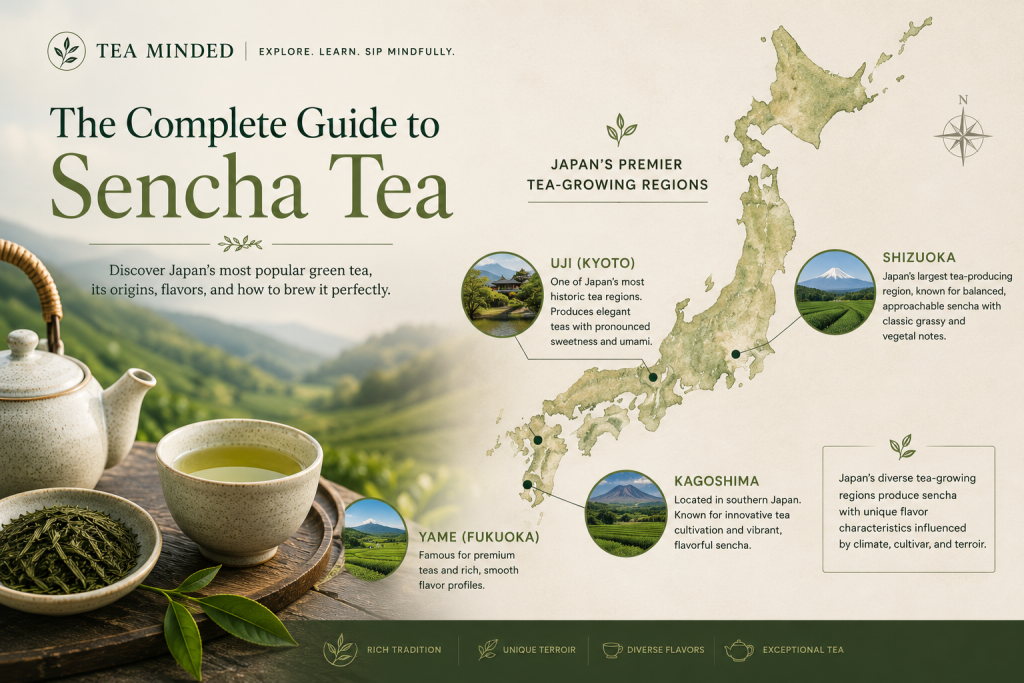
Sencha is produced throughout Japan, but several regions are particularly renowned for high-quality tea production.
Shizuoka
The largest tea-producing region in Japan.
Known for balanced, approachable sencha with classic grassy and vegetal notes.
Uji (Kyoto)
One of Japan’s most historic tea-growing regions.
Produces elegant teas with pronounced sweetness and umami.
Kagoshima
Located in southern Japan.
Known for innovative tea cultivation and vibrant, flavorful sencha.
Yame (Fukuoka)
Famous for premium teas and rich flavor profiles.
How Sencha Is Made
The production of sencha involves several carefully controlled steps.
Harvesting
Tea leaves are picked during the growing season, often beginning in spring.
Steaming
Fresh leaves are steamed immediately after harvest.
This prevents oxidation and preserves the tea’s bright green character.
Rolling
Leaves are rolled into their distinctive needle-like shape.
Drying
The leaves are carefully dried to stabilize flavor and prepare them for storage.
This process creates the familiar appearance of sencha’s slender green leaves.
What Does Sencha Taste Like?
One reason sencha remains so popular is its remarkable range of flavors.
Common tasting notes include:
- Fresh grass
- Steamed vegetables
- Seaweed
- Spinach
- Sweet corn
- Umami
- Citrus
- Floral notes
The exact flavor depends on factors such as:
- Harvest season
- Cultivar
- Region
- Processing style
- Brewing method
A high-quality sencha often balances sweetness, umami, freshness, and a pleasant astringency.
The Different Types of Sencha
Not all sencha tastes the same.
Several styles exist based primarily on steaming methods.
Asamushi Sencha (Light Steaming)
Steamed for a shorter period.
Characteristics:
- Clear liquor
- Delicate flavor
- Pronounced aroma
- Greater complexity
Chumushi Sencha (Medium Steaming)
The most balanced style.
Characteristics:
- Good body
- Balanced flavor
- Moderate sweetness
- Moderate umami
Fukamushi Sencha (Deep Steaming)
Steamed longer than traditional sencha.
Characteristics:
- Rich body
- Deep green liquor
- Strong sweetness
- Reduced bitterness
Many beginners find fukamushi sencha particularly approachable.
What Is Shincha?
Shincha means “new tea.”
It refers to the first harvest of the season, typically occurring in spring.
Because the leaves are young and freshly harvested, shincha often exhibits:
- Bright freshness
- Natural sweetness
- Vibrant aroma
- Seasonal character
Many tea enthusiasts eagerly await shincha each year.
How to Brew Sencha
Brewing temperature has a significant impact on flavor.
Sencha Brewing Guide
Tea: 1 teaspoon (approximately 3–4 grams)
Water: 6–8 ounces (180–240 ml)
Temperature: 160–175°F (70–80°C)
Steep Time: 60–90 seconds
Using water that is too hot can increase bitterness and overwhelm delicate flavors.
For more on water and brewing, see our article on How Water Changes the Taste of Tea.
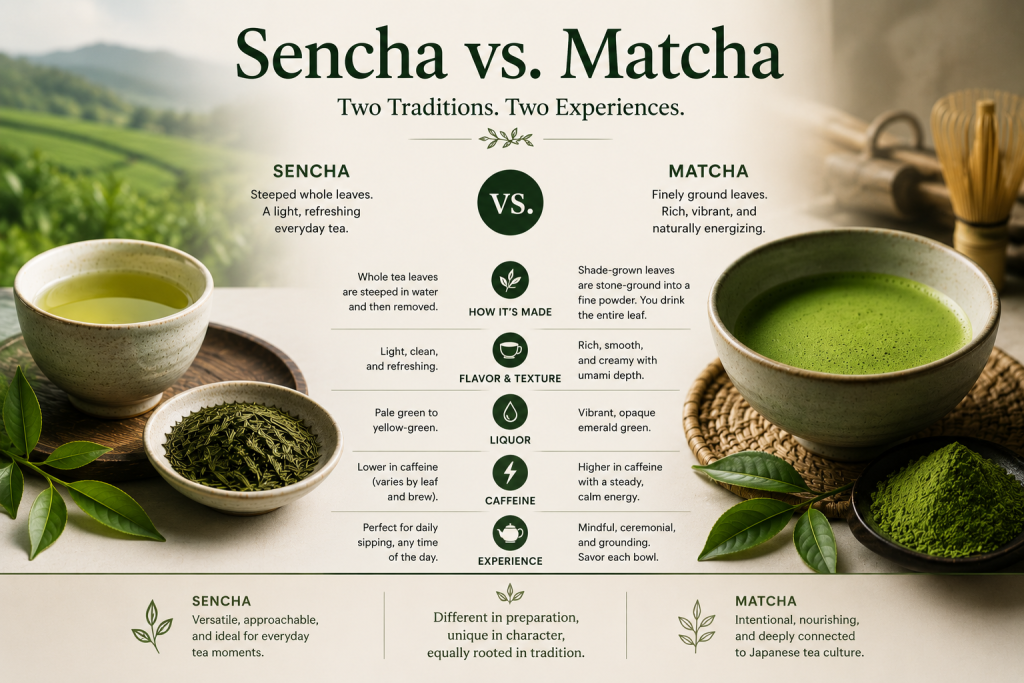
Sencha vs Matcha
Many tea drinkers wonder how sencha compares to matcha.
Sencha
- Whole leaves are infused and removed
- Light-bodied
- Refreshing
- Everyday drinking tea
Matcha
- Leaves are stone-ground into powder
- Entire leaf is consumed
- Rich texture
- Concentrated flavor
- Traditional tea ceremony use
Both are excellent examples of Japanese tea, but they offer very different experiences.
Sencha vs Gyokuro
Gyokuro is often considered one of Japan’s most prestigious teas.
Unlike sencha, gyokuro is shaded before harvest.
Sencha
- Grown in full sunlight
- Bright and refreshing
- More vegetal
Gyokuro
- Shade-grown
- Sweeter
- More umami
- More concentrated flavor
Both deserve a place in a well-rounded tea collection.
Potential Health Benefits of Sencha
Like many green teas, sencha contains:
- Catechins
- Antioxidants
- L-theanine
- Natural caffeine
Research suggests green tea consumption may support overall wellness as part of a healthy lifestyle.
However, tea should not be viewed as a substitute for professional medical advice or treatment.
For additional information on tea research, visit the National Center for Complementary and Integrative Health.
How to Choose a Good Sencha
When shopping for sencha, look for:
- Vibrant green leaves
- Fresh harvest dates
- Japanese origin
- Reputable tea merchants
- Proper storage
Avoid tea that appears dull, stale, or excessively broken.
Freshness matters.
Why Sencha Matters
Sencha is more than Japan’s most popular tea.
It is an invitation into the broader world of Japanese tea culture.
For many tea drinkers, sencha becomes the gateway to exploring gyokuro, hojicha, genmaicha, kukicha, and matcha.
Its balance of freshness, sweetness, complexity, and accessibility makes it one of the most rewarding teas to explore.
Whether you’re new to tea or a longtime enthusiast, sencha offers endless opportunities for discovery.
Related TeaMinded Articles
- The Six Types of Tea Explained
- What Makes Japanese Tea Different?
- How Water Changes the Taste of Tea
- The Craftsmanship Behind a Good Cup of Loose Leaf Tea
Frequently Asked Questions
Is sencha green tea?
Yes. Sencha is a Japanese green tea made from the leaves of the Camellia sinensis plant.
What does sencha tea taste like?
Sencha typically offers grassy, vegetal, sweet, umami-rich, and sometimes citrusy flavors depending on the cultivar and processing method.
Does sencha contain caffeine?
Yes. Sencha naturally contains caffeine, although levels vary depending on harvest, cultivar, and brewing method.
Is sencha healthier than other teas?
Sencha contains antioxidants and beneficial compounds common to many green teas, but no tea should be considered inherently superior for health.
What is the difference between sencha and matcha?
Sencha is steeped and removed before drinking, while matcha is powdered tea in which the entire leaf is consumed.

Scott is the founder of TeaMinded. He enjoys tasting and discovering teas from across the globe, with green teas and ceremonial matcha from Japan being among his favorites. He’s grateful to be immersed in the tea community, always learning and sharing along the journey.