
Quick Navigation
Flavor, Health Benefits, and How Green Tea Compares to Other Types of Tea
Green tea is one of the most popular and widely consumed types of tea in the world. Known for its fresh flavor, vibrant green color, and potential health benefits, green tea has become closely associated with mindfulness, wellness, and intentional living.
But what exactly makes green tea different from black tea, oolong tea, or white tea?
While all true teas come from the same plant — Camellia sinensis — the difference lies in how the tea leaves are processed after harvesting.
What Is Green Tea?
Green tea is a minimally oxidized tea. After harvesting, the tea leaves are quickly heated — usually through steaming or pan-firing — to prevent oxidation and preserve freshness.
This process helps maintain:
- the green color of the leaves
- grassy and vegetal flavor notes
- natural antioxidants
- amino acids like L-theanine
Japanese green teas such as sencha and matcha are typically steamed, while many Chinese green teas are pan-fired, creating different flavor profiles and aromas.
What Does Green Tea Taste Like?
Green tea is often described as:
- fresh
- vegetal
- grassy
- slightly sweet
- floral
- umami-rich
The flavor of green tea can vary dramatically depending on:
- where it is grown
- how it is processed
- water temperature
- brewing method
For example:
- Japanese sencha often tastes bright and savory
- Matcha tends to be creamy and umami-rich
- Chinese dragonwell tea is smoother and nuttier
Health Benefits of Green Tea
Green tea is frequently associated with a variety of potential health benefits because it contains antioxidants called catechins, along with naturally occurring caffeine and L-theanine.
Many tea drinkers enjoy green tea because it may support:
- calm focus and mental clarity
- mindfulness and relaxation
- antioxidant intake
- daily wellness routines
- lower caffeine consumption compared to coffee
Matcha green tea is especially notable because the powdered tea leaf is consumed directly, providing a more concentrated tea experience.
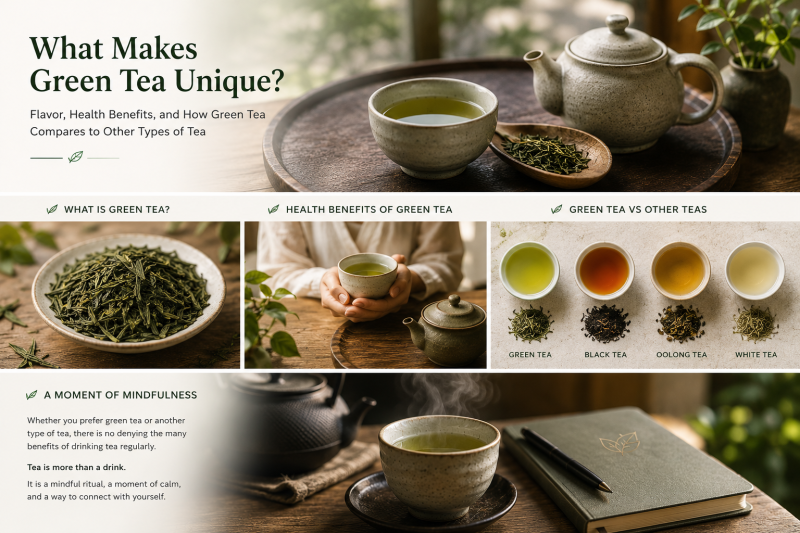
Green Tea vs Black Tea vs Oolong Tea
Green tea shares similarities with black tea, oolong tea, and white tea because all originate from the same tea plant.
However, the level of oxidation changes the flavor, aroma, and appearance of each tea type.
Green Tea
- minimally oxidized
- fresh and vegetal flavor
- lighter body
Black Tea
- fully oxidized
- richer and bolder flavor
- darker color and stronger body
Oolong Tea
- partially oxidized
- balanced between green and black tea
- often floral or creamy
White Tea
- very lightly processed
- delicate and subtle flavor
- naturally soft and smooth
Why Green Tea Continues to Grow in Popularity
Green tea has become increasingly popular because it combines flavor, ritual, and wellness in a way that fits modern interest in slow living and mindful daily habits.
For many people, preparing green tea becomes more than simply making a beverage.
It becomes:
- a calming ritual
- a moment of mindfulness
- a pause from distraction
- a way to slow down intentionally
Whether you prefer green tea, black tea, oolong tea, or white tea, tea culture continues to offer meaningful daily rituals rooted in attention and hospitality.
And perhaps that is one of the greatest benefits of tea itself.

Scott is the founder of TeaMinded. He enjoys tasting and discovering teas from across the globe, with green teas and ceremonial matcha from Japan being among his favorites. He’s grateful to be immersed in the tea community, always learning and sharing along the journey.