
Quick Navigation
TeaMinded Podcast Episode 5
Matcha has become one of the most recognizable teas in the world.
Its vivid green color appears everywhere:
coffee shops,
social media,
wellness brands,
minimalist kitchens,
and morning routines built around mindfulness and intentional living.
But beneath the popularity and visual aesthetic, matcha offers something much quieter.
Something slower.
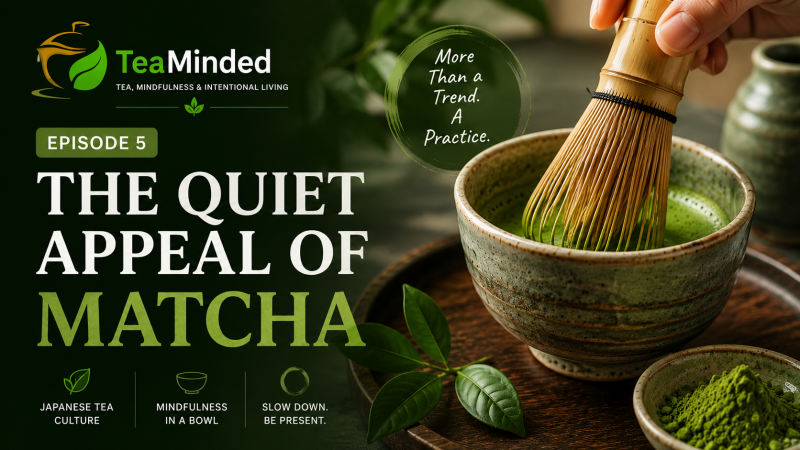
In Episode 5 of the TeaMinded Podcast, we explore the deeper appeal of matcha — not simply as a trendy drink, but as a practice rooted in Japanese tea culture, ritual, craftsmanship, and attention.
For many people, matcha becomes meaningful because of the experience surrounding it:
the whisking,
the bowl,
the aroma,
the texture,
and the deliberate pace of preparation.
Unlike fast-moving convenience culture, matcha naturally encourages stillness and presence.
In This Episode
- What makes matcha different from other teas
- Matcha and Japanese tea culture
- The ritual of preparing matcha
- Why matcha encourages mindfulness
- Matcha vs coffee culture
- Ceremonial grade matcha explained
- Tea rituals and intentional living
- Why matcha feels calming and grounding
What Is Matcha?
Unlike steeped tea, matcha is made by whisking finely ground green tea powder directly into water.
You consume the entire tea leaf.
This creates a richer, fuller tea experience while also making preparation part of the ritual itself.
Traditional matcha is produced from specially shaded tea plants, which develop higher levels of amino acids like L-theanine. This contributes to matcha’s signature:
- umami flavor
- creamy texture
- vibrant green color
- smoother energy
High-quality ceremonial matcha is often described as:
fresh,
vegetal,
slightly sweet,
and deeply calming.
Why Matcha Resonates Today
Many people are drawn to matcha because it offers an alternative rhythm.
The process itself slows the pace of a moment.
Preparing matcha requires enough attention that multitasking becomes difficult:
- measuring carefully
- whisking slowly
- observing the foam
- noticing the bowl and texture
Even a few minutes of intentional preparation can create a sense of calm before the distractions of the day begin.
For many tea drinkers, matcha becomes less about caffeine…
and more about atmosphere.
Matcha and Mindfulness
Matcha preparation has deep historical roots in Japanese tea culture and tea ceremony traditions centered around attention, hospitality, simplicity, and presence.
Even outside formal tea ceremony, matcha still carries many of those qualities.
It invites people to:
- slow down
- notice more
- engage the senses
- appreciate ordinary moments
Tea becomes not just something consumed…
but something experienced.
Listen on Spotify
Watch the Episode
About TeaMinded
TeaMinded is a podcast exploring tea culture, loose leaf tea, Japanese tea, tea rituals, craftsmanship, mindfulness, slow living, and intentional daily life through educational episodes, tea reviews, reflections, and conversations.
#Matcha #JapaneseTea #TeaPodcast #TeaCulture #Mindfulness #SlowLiving

Scott is the founder of TeaMinded. He enjoys tasting and discovering teas from across the globe, with green teas and ceremonial matcha from Japan being among his favorites. He’s grateful to be immersed in the tea community, always learning and sharing along the journey.