
Most people encounter tea through tea bags.
They’re convenient, familiar, and widely available. For many tea drinkers, tea bags are the starting point of their tea journey.
Then comes the moment of discovery.
Perhaps it’s a visit to a tea shop. A recommendation from a friend. A cup of Japanese sencha at a café. Or a beautifully packaged pouch of loose leaf tea online.
And often, the first reaction is the same:
Why is loose leaf tea so much more expensive?
The answer is surprisingly complex.
While loose leaf tea can cost more upfront, the price often reflects differences in quality, craftsmanship, sourcing, freshness, and the overall tea-drinking experience.
In this guide, we’ll explore why loose leaf tea costs more and why many tea enthusiasts believe it’s worth every penny.
Quick Navigation
Not All Tea Is Created Equal
One of the biggest misconceptions about tea is that all tea is essentially the same.
In reality, tea exists on a spectrum of quality, much like coffee, wine, chocolate, or olive oil.
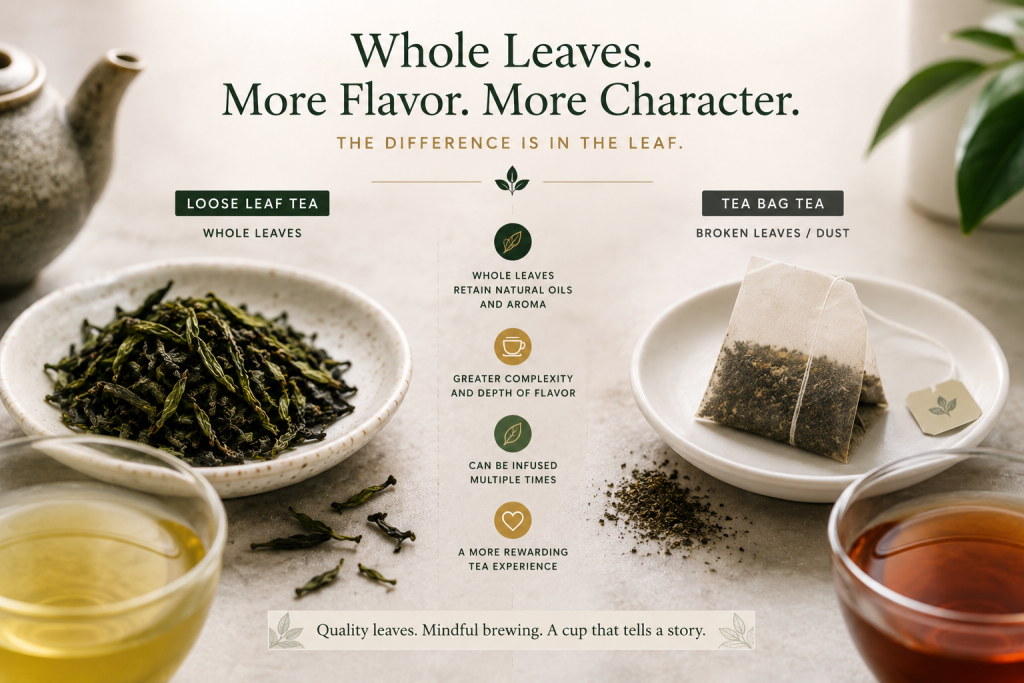
Many mass-market tea bags contain small tea particles known as fannings or dust. These smaller pieces brew quickly and consistently, making them ideal for large-scale production.
Loose leaf tea, by contrast, typically contains larger and more intact leaves.
These leaves preserve:
- Aroma
- Flavor complexity
- Natural oils
- Visual beauty
- Multiple infusions
The result is often a richer and more nuanced cup.
The Role of Craftsmanship
Tea is one of the world’s oldest handcrafted beverages.
Many premium teas require significant human labor.
Tea leaves may be:
- Hand harvested
- Carefully sorted
- Rolled by skilled artisans
- Oxidized under controlled conditions
- Fired or dried using traditional methods
Every step influences the final cup.
A premium Taiwanese oolong, Japanese gyokuro, or first-flush Darjeeling may represent generations of accumulated knowledge and craftsmanship.
Just as we appreciate handmade pottery, fine woodworking, or artisan coffee, specialty tea often reflects the skill of the people who produce it.
Why Tea Origin Matters
Tea is an agricultural product.
Where it is grown has a profound impact on flavor.
Factors such as:
- Climate
- Elevation
- Soil composition
- Rainfall
- Cultivar
all influence the final character of the tea.
A sencha from Uji may taste dramatically different from one grown in Shizuoka.
A Darjeeling tea may bear little resemblance to an Assam.
This connection between flavor and place is often referred to as terroir.
Many specialty tea drinkers are willing to pay more because they value teas that express a specific origin.
For a deeper look at regional tea differences, see our article on The Complete Guide to Sencha Tea.
Freshness Makes a Difference
Freshness is one of the most overlooked factors in tea quality.
Unlike mass-produced tea that may spend long periods in warehouses and distribution channels, many specialty tea companies prioritize freshness.
Fresh tea often delivers:
- Brighter aromas
- Greater sweetness
- Better texture
- More vibrant flavor
This is particularly noticeable in green teas and Japanese teas.
A freshly harvested sencha can taste remarkably different from an older one.
Fresh tea simply has more life.
You’re Paying for More Than Flavor
One of the most interesting things about loose leaf tea is that many enthusiasts eventually realize they aren’t paying only for flavor.
They’re paying for an experience.
Loose leaf tea encourages attention.
You measure the leaves.
Heat the water.
Observe the aroma.
Watch the leaves unfurl.
Notice subtle changes from one infusion to the next.
The process becomes part of the enjoyment.
At TeaMinded, we often talk about slowing down and paying attention. Loose leaf tea naturally supports both.
Is Loose Leaf Tea Actually More Expensive?
The answer depends on how you calculate value.
Many premium loose leaf teas can be infused multiple times.
A single serving of tea leaves may provide:
- Two infusions
- Three infusions
- Sometimes even four or more
When evaluated on a cost-per-cup basis, loose leaf tea often becomes much more affordable than it initially appears.
In some cases, a premium tea may cost less per serving than a specialty coffee shop drink.
And it often provides a longer and more intentional experience.
Tea as a Daily Ritual
For many tea drinkers, the appeal of loose leaf tea extends beyond flavor.
Tea creates a pause in the day.
A moment of quiet.
A moment of attention.
A moment of reflection.
The ritual of preparing tea can be as rewarding as drinking it.
This is one reason tea remains deeply connected to mindfulness, hospitality, and intentional living across cultures.
For more on tea and daily rituals, explore our article on The Craftsmanship Behind a Good Cup of Loose Leaf Tea.
Why Many Tea Drinkers Think It’s Worth It
Whether loose leaf tea is worth the cost is ultimately a personal decision.
But for many enthusiasts, the value comes from a combination of:
- Better flavor
- Greater freshness
- Craftsmanship
- Origin
- Multiple infusions
- Daily ritual
- Connection to tea culture
It’s not simply about paying more.
It’s about appreciating the care, skill, and tradition behind each cup.
Final Thoughts
Loose leaf tea isn’t valuable because it’s expensive.
It’s valuable because it often reflects greater care.
Greater craftsmanship.
Greater attention to detail.
Behind every cup is a story that begins long before the water touches the leaves.
There are tea gardens.
Harvests.
Artisans.
Processing traditions.
And countless small decisions that shape the final experience.
The next time you brew a favorite tea, take a moment to consider that journey.
You may find that understanding the story behind the tea makes the cup even more enjoyable.
Frequently Asked Questions
Why is loose leaf tea more expensive than tea bags?
Loose leaf tea often uses higher-quality leaves, requires more labor-intensive production methods, and emphasizes freshness, craftsmanship, and origin.
Does loose leaf tea taste better?
Many tea drinkers believe loose leaf tea offers greater flavor complexity, aroma, and texture than conventional tea bags.
Can loose leaf tea be reused?
Yes. Many high-quality loose leaf teas can be infused multiple times, producing several enjoyable cups from the same leaves.
Is loose leaf tea healthier than tea bags?
Both can contain beneficial compounds, but loose leaf tea often provides a fresher and less processed tea experience.
Is loose leaf tea worth the cost?
For many tea enthusiasts, the combination of flavor, craftsmanship, freshness, and ritual makes loose leaf tea well worth the investment.
Related TeaMinded Articles
- The Craftsmanship Behind a Good Cup of Loose Leaf Tea
- The Complete Guide to Sencha Tea
- How Water Changes the Taste of Tea
- The Six Types of Tea Explained
- Tea Bags vs Loose Leaf Tea

Scott is the founder of TeaMinded. He enjoys tasting and discovering teas from across the globe, with green teas and ceremonial matcha from Japan being among his favorites. He’s grateful to be immersed in the tea community, always learning and sharing along the journey.