
Matcha has become one of the world’s most popular wellness beverages, praised for its antioxidants, calm energy, and rich Japanese tea heritage. But many tea drinkers still ask an important question:
Is matcha acidic?
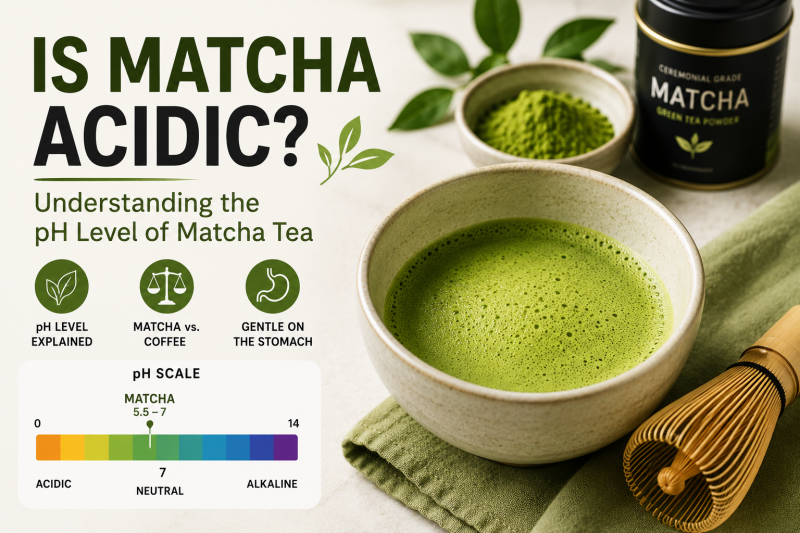
The short answer is: matcha is only mildly acidic and is generally considered much less acidic than coffee. In fact, many people who experience acid sensitivity or acid reflux find matcha to be a gentler alternative to traditional coffee beverages.
In this guide, we’ll explore the pH level of matcha, what affects its acidity, how it compares to coffee and other drinks, and whether matcha is suitable for sensitive stomachs.
Quick Navigation
What Is Matcha?
Matcha is a finely ground powder made from shade-grown Japanese green tea leaves. Unlike regular green tea, where leaves are steeped and removed, matcha involves consuming the entire tea leaf in powdered form.
This gives matcha its:
- Vibrant green color
- Rich umami flavor
- Natural caffeine content
- High concentration of antioxidants
- Smooth, creamy texture
Because matcha contains the whole tea leaf, it also provides amino acids like L-theanine, which help promote calm focus and balanced energy.
If you’re new to matcha preparation, TeaMinded’s guide on how to make matcha taste good offers practical tips for improving flavor and reducing bitterness.
Is Matcha Acidic?
Yes — but only slightly.
Matcha typically has a pH level between:
- 5.5 and 7
- Mildly acidic to nearly neutral
For comparison:
- Coffee: pH 4.5–5
- Orange juice: pH 3–4
- Soda: pH 2–4
This means matcha is significantly less acidic than coffee and many common beverages.
Many people who experience stomach irritation from coffee report that matcha feels smoother and easier to tolerate.
Why Matcha Is Less Acidic Than Coffee
Several factors contribute to matcha’s lower acidity.
1. Shade-Grown Cultivation
Matcha tea plants are grown under shade before harvest, which increases amino acids like L-theanine and softens bitterness.
2. Natural L-Theanine Content
L-theanine contributes to matcha’s smoother flavor profile and balanced energy experience.
3. Lower Acid Concentration
Compared to coffee, matcha contains fewer harsh acidic compounds.
4. Different Caffeine Experience
Although matcha contains caffeine, it releases more gradually due to the interaction between caffeine and L-theanine.
This often results in:
- Less jitteriness
- Less stomach irritation
- More sustained energy
Can Matcha Cause Acid Reflux?
For most people, matcha is considered gentler on the stomach than coffee.
However, individual tolerance varies.
Some people may still experience discomfort if:
- They drink matcha on an empty stomach
- They consume excessive amounts
- They use low-quality matcha
- They are highly sensitive to caffeine
If you are prone to acid reflux or stomach sensitivity, it may help to:
- Drink matcha with food
- Use ceremonial-grade matcha
- Avoid overly concentrated servings
- Add milk or oat milk for additional smoothness
What Affects Matcha Acidity?
Several factors influence how acidic matcha tastes and feels.
Tea Quality
Higher-quality Japanese matcha tends to be smoother and less bitter.
Preparation Temperature
Water that is too hot can increase bitterness and harshness.
Ideal matcha water temperature:
- Around 175°F (80°C)
Storage Conditions
Exposure to heat, air, and moisture can degrade flavor and alter the tea’s characteristics over time.
Growing Region
Different Japanese growing regions produce slightly different flavor profiles and acidity levels.
TeaMinded’s article on what makes Japanese tea different explains how cultivation methods influence flavor, texture, and overall tea quality.
Is Matcha Alkaline or Acidic?
This question often creates confusion online.
While matcha itself is mildly acidic in pH, many wellness discussions describe matcha as “alkaline-forming” because of how some believe it affects the body after digestion.
Scientifically speaking:
- Matcha has a mildly acidic pH
- But it is generally considered less acidic than coffee and soda
Health Benefits of Matcha
Despite its mild acidity, matcha is widely recognized for its nutritional profile.
Matcha contains:
- Catechins
- Chlorophyll
- L-theanine
- Antioxidants
- Natural caffeine
According to Harvard T.H. Chan School of Public Health, green tea contains polyphenols and antioxidants that may support overall wellness and healthy lifestyle habits.
How to Make Matcha Gentler on the Stomach
If you are sensitive to acidity, these techniques may help:
Use High-Quality Matcha
Ceremonial-grade matcha is usually smoother and less bitter.
Avoid Boiling Water
Water that is too hot increases bitterness.
Drink Matcha with Food
This may reduce stomach discomfort.
Add Milk or Oat Milk
Milk-based matcha drinks often feel smoother and creamier.
Don’t Over-Concentrate
Using too much powder can create harsh flavor and stronger acidity perception.
Final Thoughts
So, is matcha acidic?
Technically yes — but only mildly.
Compared to coffee, soda, and citrus beverages, matcha is significantly less acidic and is often easier on the stomach. Its balanced caffeine profile, antioxidant content, and smooth flavor make it a popular alternative for people looking to reduce coffee consumption while still enjoying a naturally energizing drink.
For many tea drinkers, matcha offers a more mindful and balanced daily ritual — one that combines flavor, tradition, and wellness in a single cup.

Scott is the founder of TeaMinded. He enjoys tasting and discovering teas from across the globe, with green teas and ceremonial matcha from Japan being among his favorites. He’s grateful to be immersed in the tea community, always learning and sharing along the journey.