
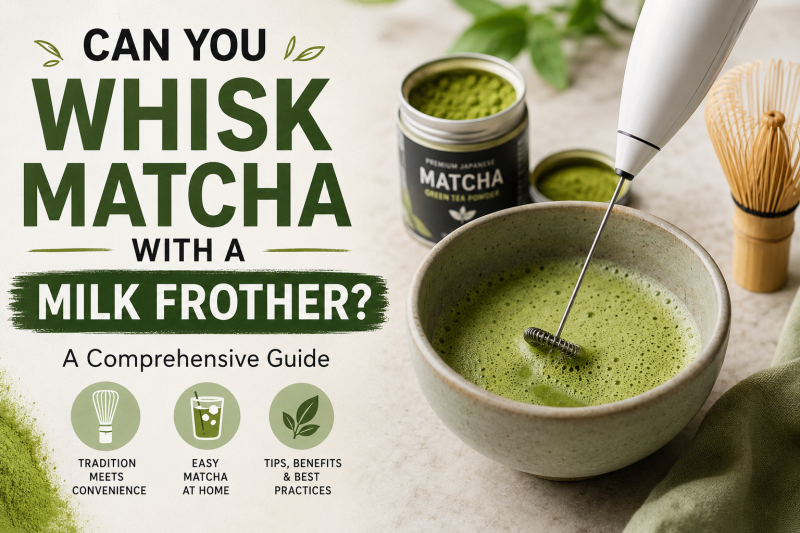
Matcha preparation has traditionally been associated with Japanese tea ceremonies, bamboo whisks, and carefully practiced techniques. But as matcha becomes more popular in modern kitchens, many tea drinkers are asking a practical question:
Can you whisk matcha with a milk frother?
The answer is yes — and for many people, a milk frother is one of the easiest and most convenient ways to prepare matcha at home.
In this guide, we’ll explore how milk frothers compare to traditional bamboo whisks, the pros and cons of using one, best practices for creating smooth matcha, and how to avoid common mistakes.
Quick Navigation
What Is Matcha?
Matcha is a finely ground powdered green tea made from shade-grown Japanese tea leaves. Unlike traditional green tea, where leaves are steeped and discarded, matcha allows you to consume the entire leaf in powdered form.
This gives matcha its:
- Rich umami flavor
- Vibrant green color
- Creamy texture
- Natural caffeine content
- High concentration of antioxidants
Because matcha is a powder rather than loose leaves, proper mixing is essential for creating a smooth and enjoyable cup.
If you’re new to matcha preparation, TeaMinded’s guide on how to make matcha taste goodoffers helpful techniques for improving flavor and texture.
Traditional Matcha Whisking
Traditionally, matcha is prepared using a bamboo whisk called a chasen.
The bamboo whisk is designed specifically to:
- Break up clumps
- Aerate the tea
- Create foam
- Produce a smooth consistency
In Japanese tea culture, whisking matcha is considered part of the ritual itself, a slow and intentional process connected to mindfulness and hospitality.
However, many modern tea drinkers are looking for faster or more convenient preparation methods.
Can You Use a Milk Frother for Matcha?
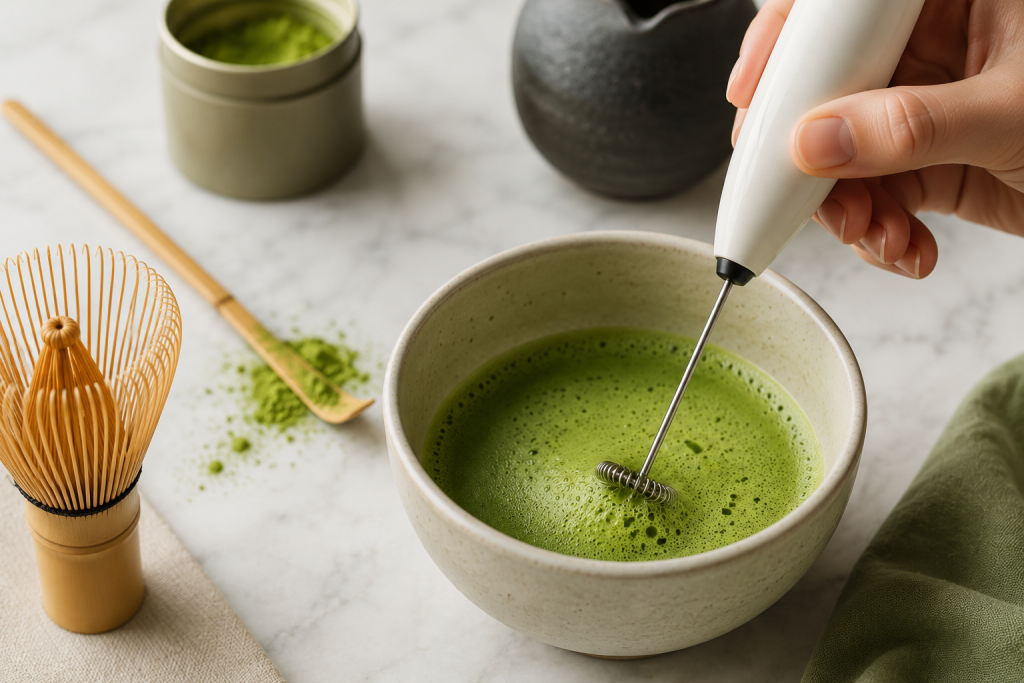
Yes, a milk frother can effectively whisk matcha.
In fact, handheld milk frothers have become increasingly popular for making:
- Matcha lattes
- Iced matcha
- Daily wellness drinks
- Quick morning tea routines
A milk frother spins rapidly, helping dissolve the powder while creating foam and texture similar to traditional whisking.
While it may not fully replicate the ceremonial experience of using a bamboo whisk, it can produce excellent results for everyday matcha preparation.
Benefits of Using a Milk Frother for Matcha
1. Faster Preparation
Milk frothers can prepare matcha in seconds, making them ideal for busy mornings.
2. Easy to Use
Beginners often find frothers simpler than learning traditional whisking techniques.
3. Excellent for Matcha Lattes
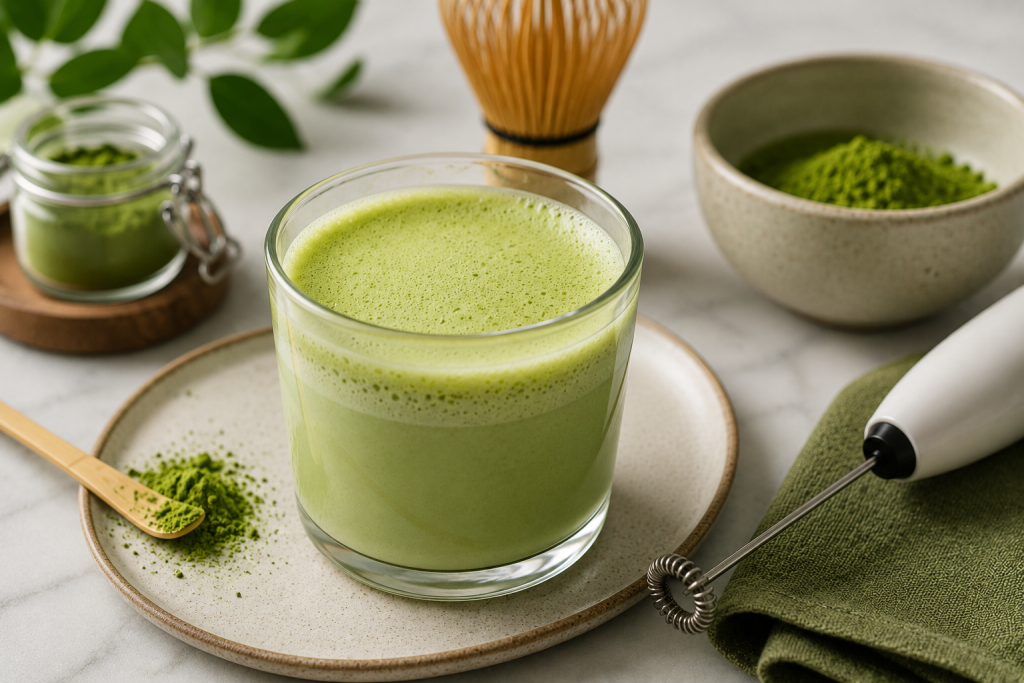
Milk frothers work especially well when preparing matcha with milk or milk alternatives.
4. Convenient Cleanup
Most handheld frothers rinse clean quickly and store easily.
5. Great Foam Texture
A frother can create a creamy top layer similar to café-style matcha drinks.
How to Whisk Matcha with a Milk Frother
Ingredients
- 1 teaspoon ceremonial or premium matcha
- 2 oz warm water
- Optional milk or milk alternative
Instructions
- Sift the matcha powder into a cup or bowl.
- Add warm water (not boiling).
- Insert the milk frother into the liquid.
- Froth for 15–20 seconds until smooth and lightly foamy.
- Add steamed milk or ice if desired.
For best results, use water around 175°F (80°C). Water that is too hot can make matcha bitter.
Does a Milk Frother Replace a Bamboo Whisk?
Not entirely.
Traditional bamboo whisks are still preferred for:
- Japanese tea ceremonies
- Ceremonial-grade matcha
- Traditional preparation rituals
- Greater control over texture
However, milk frothers are highly effective for modern everyday use.
Many matcha enthusiasts actually use both:
- Bamboo whisk for intentional tea sessions
- Milk frother for convenience and lattes
Best Matcha for Milk Frothers
Not all matcha performs equally well with frothers.
Recommended Types
- Ceremonial grade matcha
- Premium Japanese matcha
- Smooth-texture matcha powders
Lower-quality culinary matcha may become grainy or bitter when simply frothed.
TeaMinded’s article on what makes Japanese tea different also explains why Japanese tea cultivation methods greatly influence matcha flavor and texture.
Common Mistakes When Using a Milk Frother
Using Boiling Water
Excessively hot water damages flavor and increases bitterness.
Skipping the Sifting Step
Matcha clumps easily. Sifting improves smoothness dramatically.
Using Too Much Matcha
Over-concentrated matcha can taste harsh and muddy.
Frothing Too Aggressively
Over-frothing may create excessive bubbles rather than creamy foam.
Using Poor-Quality Matcha
High-quality matcha matters more than the whisking tool itself.
Is Matcha Still Healthy When Made with a Frother?
Yes.
Using a milk frother does not reduce the nutritional benefits of matcha. Matcha still contains:
- Catechins
- Antioxidants
- L-theanine
- Natural caffeine
According to Harvard T.H. Chan School of Public Health, green tea compounds may support overall wellness and healthy lifestyle habits.
Final Thoughts
So, can you whisk matcha with a milk frother?
Absolutely.
While a traditional bamboo whisk remains the classic preparation method, milk frothers provide a fast, practical, and highly effective alternative for modern tea drinkers. They’re especially useful for matcha lattes, iced matcha drinks, and busy daily routines.
Ultimately, the best preparation method is the one that helps you enjoy matcha consistently and mindfully.
Whether you prefer the ritual of a bamboo whisk or the convenience of a milk frother, both approaches can help you appreciate the depth and beauty of Japanese tea culture.

Scott is the founder of TeaMinded. He enjoys tasting and discovering teas from across the globe, with green teas and ceremonial matcha from Japan being among his favorites. He’s grateful to be immersed in the tea community, always learning and sharing along the journey.