
Matcha is known for its vibrant green color, smooth umami flavor, and delicate aroma. But because matcha is a finely ground green tea powder, many tea drinkers eventually ask an important question:
Should matcha be refrigerated?
The short answer is: sometimes — but not always.
Proper matcha storage can significantly affect flavor, freshness, aroma, and shelf life. In this guide, we’ll explore expert recommendations on refrigerating matcha, when refrigeration helps, when it may hurt quality, and the best ways to store matcha for long-term freshness.

Quick Navigation
What Is Matcha?
Matcha is a finely ground powder made from shade-grown Japanese green tea leaves. Unlike traditional tea, where leaves are steeped and discarded, matcha involves consuming the entire tea leaf in powdered form.
This gives matcha its:
- Bright green color
- Rich antioxidant content
- Natural caffeine
- Creamy texture
- Distinct umami flavor
Because matcha is highly sensitive to oxygen, heat, moisture, and light, proper storage matters far more than with most regular teas.
If you’re new to matcha preparation, TeaMinded’s guide on how to make matcha taste good</a> offers helpful tips for improving flavor and freshness.
Should Matcha Be Refrigerated?
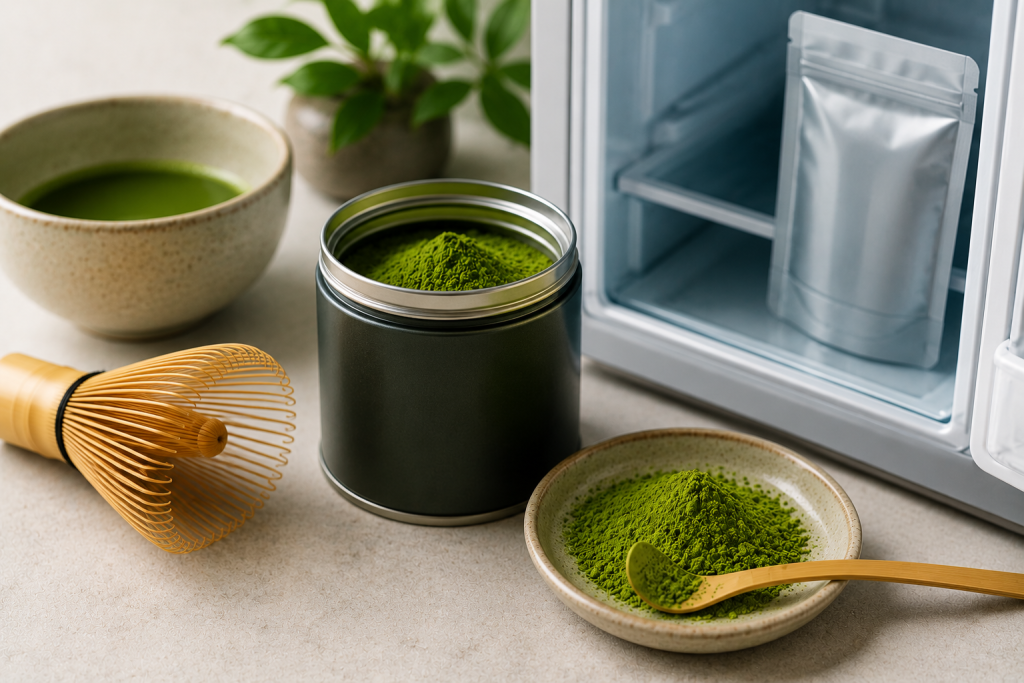
Yes — unopened matcha generally benefits from refrigeration.
However, once opened, refrigeration becomes more complicated.
Unopened Matcha
Refrigerating unopened matcha can help:
- Preserve freshness
- Slow oxidation
- Maintain vibrant color
- Protect aroma and flavor
This is especially helpful for:
- Premium ceremonial-grade matcha
- Long-term storage
- Warm or humid climates
Opened Matcha
Once opened, refrigeration can sometimes create moisture problems if not handled carefully.
Condensation may form when:
- Cold matcha is exposed to warm air
- Containers are opened too quickly
- Moisture enters the powder
This can lead to:
- Clumping
- Flavor degradation
- Reduced freshness
For frequently used matcha, many experts recommend storing it in a cool, dry pantry instead.
Why Matcha Is Sensitive to Storage Conditions
Matcha is much more delicate than loose leaf tea because it is finely powdered and exposes more surface area to oxygen.
Several environmental factors can quickly degrade matcha quality.
Light
Exposure to light can dull matcha’s vibrant green color.
Oxygen
Oxidation gradually reduces flavor and aroma.
Heat
Warm temperatures accelerate deterioration.
Moisture
Humidity and condensation can cause clumping and spoilage.
Odors
Matcha easily absorbs nearby smells from refrigerators, spices, and other foods.
This is why airtight storage is essential.
TeaMinded’s article on what makes Japanese tea different also explains why high-quality Japanese teas require careful handling and storage.
Best Ways to Store Matcha
1. Use an Airtight Container
Always store matcha in:
- Airtight tins
- Opaque containers
- Resealable high-quality packaging
2. Keep It Away from Light
Dark cabinets or pantries work best.
3. Avoid Heat and Humidity
Do not store matcha:
- Near ovens
- Above stoves
- In direct sunlight
4. Refrigerate Unopened Matcha
This helps preserve freshness for long-term storage.
5. Let Refrigerated Matcha Reach Room Temperature Before Opening
This minimizes condensation.
How Long Does Matcha Last?
Unopened Matcha
Typically lasts:
- 6–12 months when refrigerated
Opened Matcha
Best consumed within:
- 1–2 months for peak flavor
Over time, matcha may:
- Lose brightness
- Taste flatter
- Become more bitter
- Turn olive-green rather than vibrant green
Should You Freeze Matcha?
Freezing is possible but usually unnecessary for most tea drinkers.
If freezing:
- Use completely airtight packaging
- Avoid repeated thawing
- Allow full room-temperature adjustment before opening
Frequent temperature changes can introduce damaging moisture.
Signs Matcha Has Gone Bad
Here are common signs that matcha is no longer fresh:
Dull Color
Fresh matcha should be vibrant green.
Bitter or Flat Flavor
Older matcha often loses sweetness and umami.
Musty Smell
This may indicate moisture exposure.
Clumping
Minor clumping is normal, but heavy moisture clumping is not.
Expert Opinion on Refrigerating Matcha
Tea experts generally agree on a balanced approach:
Refrigeration Is Helpful For:
- Unopened matcha
- Premium ceremonial matcha
- Long-term freshness
- Humid climates
Pantry Storage Is Better For:
- Frequently used matcha
- Daily tea routines
- Dry, climate-controlled homes
The key factor is avoiding moisture and oxygen exposure.
Matcha Freshness and Flavor
Fresh matcha offers:
- Sweeter flavor
- More umami
- Creamier texture
- Better aroma
- Brighter green color
According to Harvard T.H. Chan School of Public Health, green tea contains antioxidants and polyphenols associated with overall wellness and healthy lifestyle habits.
Proper storage helps preserve these qualities while maintaining the tea’s delicate character.
Final Thoughts
So, should matcha be refrigerated?
In many cases, yes — especially before opening. Refrigeration can help preserve freshness, color, and flavor when done correctly.
However, once opened, proper airtight storage in a cool, dry place is often the better everyday solution, particularly if you drink matcha regularly.
Ultimately, the best storage method depends on:
- Your climate
- How quickly you consume matcha
- The quality of the tea
- Your storage setup
With proper care, matcha can remain vibrant, flavorful, and enjoyable long after opening — helping you maintain a more intentional and rewarding tea ritual.

Scott is the founder of TeaMinded. He enjoys tasting and discovering teas from across the globe, with green teas and ceremonial matcha from Japan being among his favorites. He’s grateful to be immersed in the tea community, always learning and sharing along the journey.