
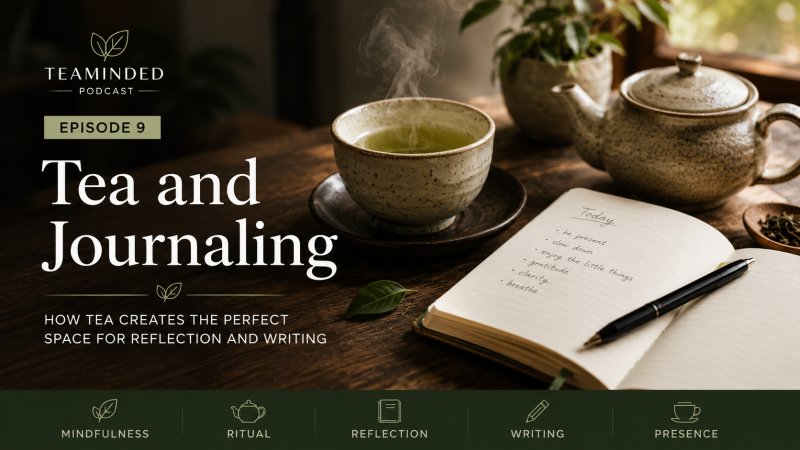
Tea and journaling are two practices that naturally complement one another.
Both encourage slowing down. Both reward attention. And both create space for reflection in a world that often feels rushed and distracted.
Whether you’re keeping a daily journal, practicing gratitude, recording travel experiences, or simply processing your thoughts, pairing journaling with a cup of tea can transform writing from a task into a meaningful ritual.
In Episode 9 of the TeaMinded Podcast, we explore the connection between tea and journaling and why these simple practices have become important tools for mindfulness, creativity, and intentional living.
Quick Navigation
Why Do Tea and Journaling Work So Well Together?
Tea and journaling share a common quality: they invite presence.
Unlike activities designed for speed and efficiency, both tea preparation and journaling encourage us to pause, observe, and pay attention.
The process of preparing loose leaf tea naturally slows the mind.
Heating water.
Measuring tea leaves.
Watching steam rise from the cup.
These small actions create a transition between the busyness of daily life and the quieter mindset needed for thoughtful writing.
For many people, tea becomes a signal that it’s time to reflect.
How Tea Improves Journaling
One of the biggest challenges in journaling is simply getting started.
A blank page can feel intimidating.
Tea helps create the mental space needed to begin.
Many tea drinkers find that journaling after preparing tea helps them:
- organize their thoughts
- reduce distractions
- improve focus
- encourage creativity
- develop a sustainable writing habit
Tea does not provide answers.
Instead, it creates an environment where reflection becomes easier.
Tea as a Mindfulness Practice
Tea culture has long been associated with mindfulness and attention.
Japanese tea traditions, Chinese gongfu tea, and many other tea rituals emphasize being fully present during preparation and consumption.
Journaling functions in a similar way.
Both practices encourage:
- observation
- gratitude
- awareness
- intentionality
Together, tea and journaling become a powerful daily mindfulness ritual.
Creating a Tea and Journaling Ritual
The good news is that you do not need an elaborate setup.
A simple ritual might include:
- a favorite loose leaf tea
- a notebook or journal
- a comfortable chair
- ten minutes of uninterrupted time
The goal is not perfection.
The goal is consistency.
A small daily practice often produces more meaningful results than occasional bursts of inspiration.
Tea, Creativity, and Reflection
Many writers, artists, and creative thinkers have relied on rituals to help establish focus.
Tea provides a gentle framework for creativity.
The ritual itself slows the pace of thinking and creates a calmer environment for exploring ideas.
Whether you’re journaling about:
- daily life
- gratitude
- personal growth
- travel experiences
- creative projects
Tea helps create the atmosphere where deeper thoughts can emerge.
Why Tea and Journaling Matter in a Digital World
Modern life is increasingly dominated by screens, notifications, and constant stimulation.
Tea and journaling offer something different.
They create a small analog space within the day.
A place for reflection.
A place for attention.
A place for noticing.
And perhaps that is why these practices continue to resonate.
They remind us that meaningful moments often begin with something simple:
a cup of tea,
an open notebook,
and a few quiet minutes of attention.
Enjoy the Episode on Spotify and YouTube

Scott is the founder of TeaMinded. He enjoys tasting and discovering teas from across the globe, with green teas and ceremonial matcha from Japan being among his favorites. He’s grateful to be immersed in the tea community, always learning and sharing along the journey.