
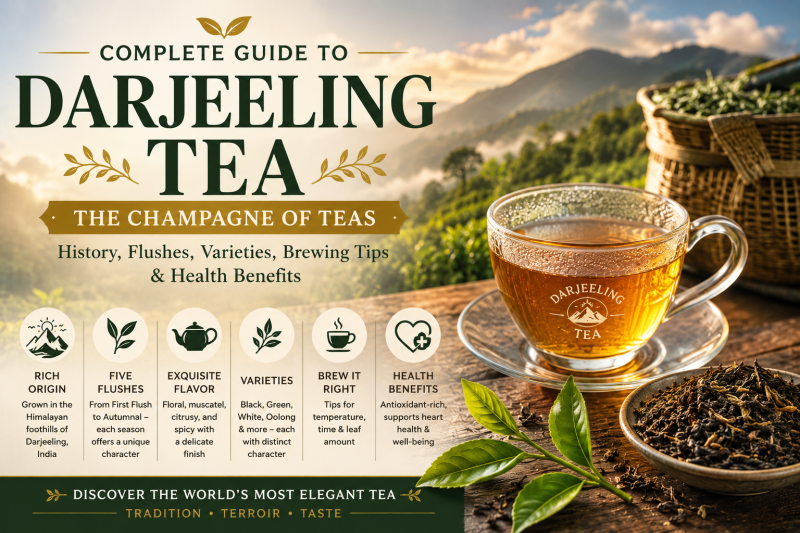
Darjeeling tea is one of the most celebrated beverages in the world — prized for its floral complexity, its extraordinary terroir, and its remarkable range of varieties. This complete guide covers everything: the history, the flushes, the varieties, how to brew it properly, and the health benefits that make it worth drinking every day.
Quick Navigation
What Is Darjeeling Tea?
Often called the “Queen of Teas” and the “Champagne of Teas,” Darjeeling tea is produced exclusively in the Darjeeling district of West Bengal, India — nestled high in the Himalayan foothills. Its reputation rivals that of fine wine: tied inextricably to its place of origin, deeply seasonal, and impossible to replicate anywhere else in the world.
Despite being widely marketed as a black tea, Darjeeling is more nuanced than that label suggests. More than 90% of Darjeeling teas are not fully oxidized, placing most of them closer to oolong than true black tea. When properly brewed, Darjeeling yields a thin-bodied, shimmery golden liquor with a floral, musky aroma and a distinctive spicy-sweet finish.
What truly sets Darjeeling apart from other Indian teas is its plant variety. Most Indian teas are made from the large-leaved Assam variety of Camellia sinensis, while Darjeeling uses the small-leaved Chinese variety — the same plant that produces the finest teas of China. The result is a tea of extraordinary delicacy.
Curious how Darjeeling compares to other Indian teas? Read our Indian Tea Varieties Guide on TeaMinded for a side-by-side look at Darjeeling, Assam, Nilgiri, and more.
History and Origin of Darjeeling Tea
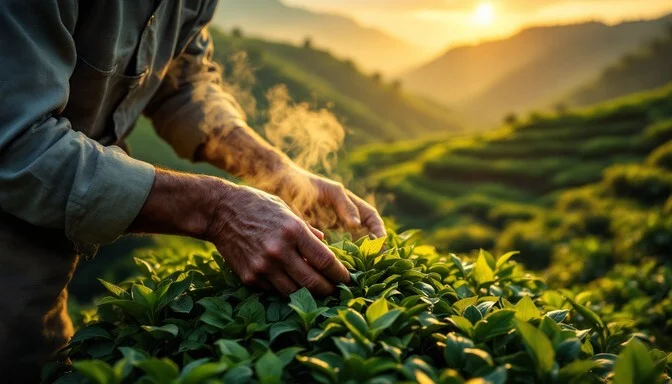
Tea cultivation in Darjeeling began in 1841, initiated by Arthur Campbell, a civil surgeon with the Indian Medical Service. Campbell had been transferred from Kathmandu, Nepal, to the Darjeeling district in 1839. Two years later, he brought seeds of the Chinese Camellia sinensis plant from Kumaun and began experimenting with cultivation in Darjeeling’s high-altitude terrain.
The British government took notice. Around 1847, government tea nurseries were established, and by the 1850s, commercial tea production was underway. In 1856, the Kurseong and Darjeeling Tea Company opened the Alubari tea garden — the first of many that would transform the region into one of the world’s most iconic tea-growing destinations.
Darjeeling tea has since earned Geographical Indication (GI) status, the same form of legal protection enjoyed by Champagne wine. This means only teas grown and produced within the Darjeeling district can legally be called “Darjeeling tea” — protecting both producers and consumers from imitations.
Taste and Terroir: What Makes Darjeeling Unique
Darjeeling’s flavor is inseparable from its geography. The combination of high altitude (up to 2,000 meters), cool temperatures, misty mornings, well-drained slopes, and specific soil composition creates a growing environment that cannot be replicated elsewhere — what the French call terroir.
The flavor profile of Darjeeling tea varies by variety and flush, but common tasting notes include:
- Muscatel — a characteristic grape-like quality unique to Darjeeling, most pronounced in the second flush
- Floral — light, perfumed notes reminiscent of orchids or jasmine
- Citrus — a tangy brightness, particularly in first-flush teas
- Musky spice — a warm, earthy depth
- Astringent tannin — a clean, dry finish that tea connoisseurs prize
The comparison to Champagne is apt: like Muscat grapes, Darjeeling tea is produced in relatively small quantities, harvested in distinct seasonal windows, and commands premium prices as a result of its rarity and place-specific character.
The Darjeeling Tea Harvest: Understanding the Flushes
Like fine wine vintages, Darjeeling tea is defined by its harvest seasons — called flushes. Each flush produces a tea with a distinct flavor, color, and character.
First Flush (Mid-March)
The first harvest of the year arrives in mid-March, just as winter ends and the spring rains begin. First-flush Darjeeling is highly prized for its light, golden-green liquor, delicate floral aroma, and mild astringency — with a flavor comparable to high-quality oolong. These teas are often auctioned at premium prices and snapped up quickly by connoisseurs in Germany, Japan, and the UK. They’re best brewed light and consumed fresh.
In-Between Flush
If the winter ends early, some estates harvest a small quantity between the first and second flush. These teas bridge the two seasons and are less commonly found outside India.
Second Flush (June)
The second flush, harvested in June, is widely considered the pinnacle of Darjeeling tea. It delivers a strong muscatel flavor, dark golden-amber liquor, and fruity notes of currant, peach, or dried apricot — with a richer, fuller body than the first flush. Second-flush Darjeeling is the tea most people think of when they imagine “Darjeeling”: complex, aromatic, and deeply satisfying.
Monsoon Flush
Harvested during the rainy season between the second flush and autumn, monsoon-flush Darjeeling is more heavily oxidized and considerably less refined in flavor. It is rarely exported and is most commonly used to produce masala chai blends.
Autumnal Flush
The final harvest of the year produces a tea that is deeper copper in color, less spicy and less delicate than earlier flushes, and fuller-bodied. Autumnal Darjeeling is frequently used in blending — combined with earlier flushes to create well-rounded, accessible teas for everyday drinking.
Darjeeling Tea Varieties
While black Darjeeling is the most widely available, the district produces a full range of tea types.
Darjeeling Black Tea
The most common variety. Black Darjeeling goes through a complete production process — withering, rolling, fermentation, machine drying, and sorting — and is 100% oxidized. The result is a dark, fruity, nutty, and robustly flavored tea that forms the foundation of many premium blends.
Darjeeling White Tea
The rarest and most expensive Darjeeling variety. White Darjeeling is made from hand-picked leaves dried in the sun with no rolling, fermentation, or firing. This minimal intervention preserves the leaf’s natural minerals and characteristics. Expect a pale golden-green brew with a very mellow, subtly sweet flavor and a light, refined aroma. Because the leaves remain fluffy and airy, you’ll need more leaf per cup than with other varieties.
Darjeeling Oolong Tea
Positioned between green and black, Darjeeling oolong is approximately 50% oxidized and shares much in common with traditional Chinese oolongs. Some estates continue to maintain old China bushes (Chesima) specifically for this variety. The second-flush oolong is especially prized: dark orange in color, with strong muscatel flavor and fruity aroma.
Darjeeling Green Tea
Withered and steamed but not fermented, Darjeeling green tea retains a high concentration of natural antioxidants and produces a light green liquor when brewed. It is increasingly popular for its association with heart health and cholesterol management. Like all green teas, it can turn bitter quickly — watch your steep time carefully.
How to Brew Darjeeling Tea Properly
Darjeeling tea rewards careful preparation. All varieties are best enjoyed without milk or sugar, which mask the nuanced flavors that make this tea worth drinking.
Water
Use natural spring water or non-carbonated filtered water. Avoid hard tap water and distilled water — the latter lacks the minerals that enhance flavor.
Temperature and Steeping Time
| Variety | Water Temperature | Steep Time |
|---|---|---|
| Black (First Flush) | 85–90°C (185–195°F) | 2–3 minutes |
| Black (Second Flush) | 90–95°C (195–205°F) | 3–4 minutes |
| Green | 75–80°C (165–175°F) | 1.5–2 minutes |
| White | 75–80°C (165–175°F) | 2–3 minutes |
| Oolong | 85–90°C (185–195°F) | 2–3 minutes |
Never pour boiling water (100°C/212°F) directly over Darjeeling leaves — it destroys delicate flavor compounds and negates much of the tea’s nutritional value.
Method
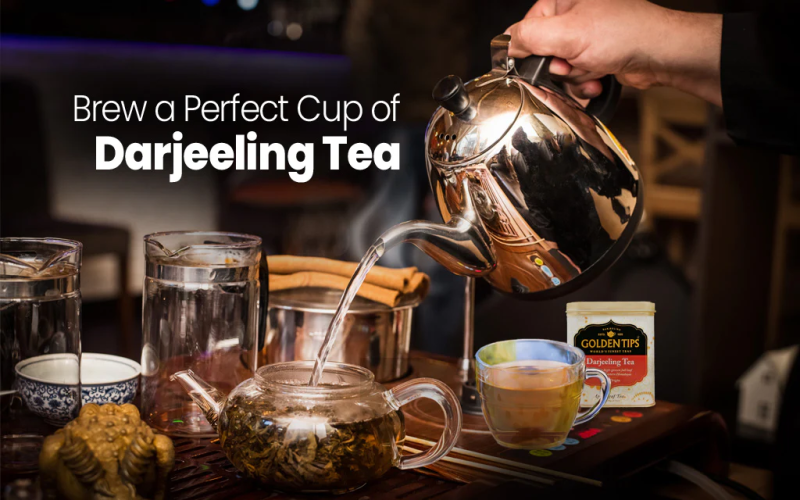
Use a loose-leaf infuser or teapot with a strainer. Avoid metallic infuser balls — they restrict leaf expansion and impede proper infusion. Pre-warm your serving teapot with a splash of boiling water before pouring, and use approximately 1 teaspoon (2–3g) of loose leaf per cup (250ml).
Health Benefits of Darjeeling Tea
Regular consumption of Darjeeling tea offers a meaningful range of benefits:
- Dental health — naturally occurring compounds inhibit bacteria associated with tooth decay and gum disease
- Digestive health — shown to be effective against stomach ulcers; helps slow the growth of Helicobacter pylori, the bacterium responsible for most stomach ulcers, and is associated with reduced risk of gastric cancer
- Antioxidant protection — polyphenols and catechins neutralize free radicals and reduce cellular damage
- Heart health — particularly the green and oolong varieties, associated with reduced LDL cholesterol and improved cardiovascular function
- Weight management — natural caffeine supports metabolism and acts as a mild diuretic
- Mental alertness — caffeine combined with L-Theanine promotes focused, calm energy without the jitteriness of coffee
For an independent overview of the research, the Tea Association of the USA maintains a regularly updated collection of peer-reviewed studies on tea and health.
Buying Darjeeling Tea: What to Look For
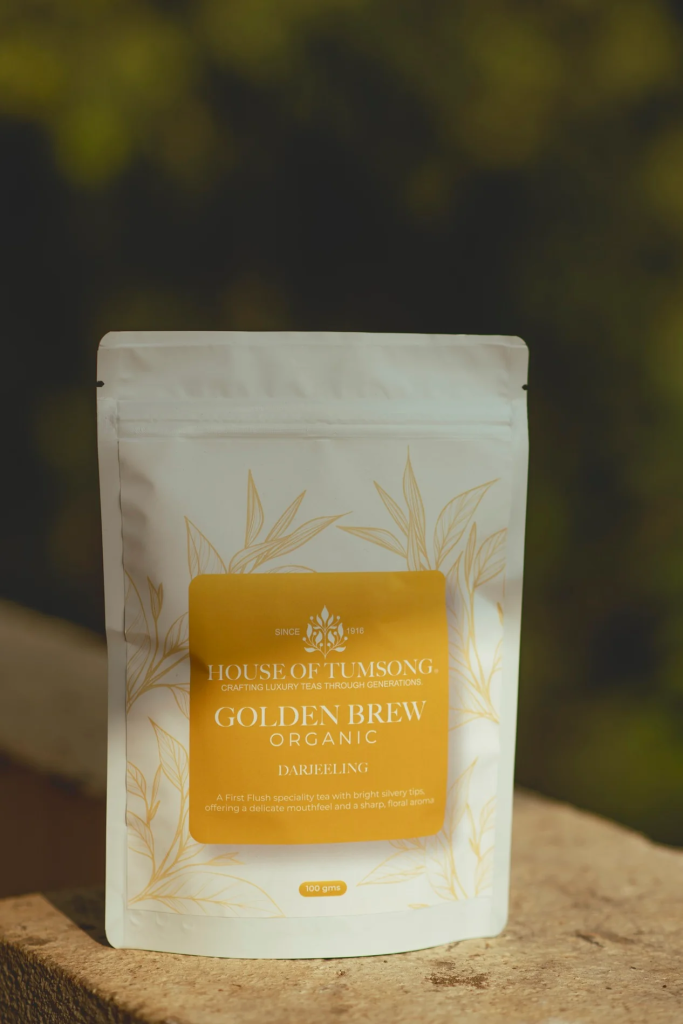
- Look for the Darjeeling certification logo — issued by the Tea Board of India, it guarantees authenticity and GI compliance
- Choose a specific flush — reputable vendors specify first flush, second flush, or autumnal; unlabeled “Darjeeling blend” teas are often diluted with cheaper teas from other regions
- Buy single-estate when possible — single-estate teas offer the clearest expression of terroir and are more easily traced for quality
- Choose loose leaf over bags — Darjeeling tea bags typically contain broken or fannings-grade tea that brews flat; the full-leaf experience is incomparably better
- Store properly — airtight, opaque container away from heat, light, and moisture; consume within 12 months for best flavor
Frequently Asked Questions About Darjeeling Tea
Is Darjeeling tea really a black tea? Technically, most Darjeeling teas are closer to oolong. More than 90% are not fully oxidized, producing a much lighter, more complex cup than conventional black teas from Assam or Sri Lanka.
Why is Darjeeling tea so expensive? It is produced in small quantities, harvested by hand in limited seasonal windows, grown at high altitude under specific conditions, and geographically protected. The labor, terroir, and rarity all contribute to premium pricing.
Can I add milk to Darjeeling tea? You can, but most experts recommend against it — particularly for first and second flush. Milk significantly mutes the muscatel and floral notes that define Darjeeling’s character. Autumnal flush blends are more forgiving if you prefer milk.
What’s the difference between first flush and second flush? First flush (March) is lighter, fresher, and more delicate — often compared to fine oolong. Second flush (June) is fuller and more complex, defined by the strong muscatel character Darjeeling is most famous for.
How long does Darjeeling tea last? Properly stored, loose-leaf Darjeeling retains good quality for up to 12 months. First-flush teas are best consumed within 3–6 months — their delicate aromatics fade over time.
Conclusion
Darjeeling tea is not simply a beverage — it is a product of place, season, skill, and history. From the delicate first-flush harvests of March to the rich muscatel depth of second-flush June teas, each cup tells a different story of one of the world’s most remarkable growing regions.
Whether you’re new to Darjeeling or deepening your appreciation, approach it on its own terms: no milk, good water, the right temperature, and a little patience. The reward is a tea experience unlike any other.
Published by TeaMinded | Your trusted resource for tea education, reviews, and culture

Scott is the founder of TeaMinded. He enjoys tasting and discovering teas from across the globe, with green teas and ceremonial matcha from Japan being among his favorites. He’s grateful to be immersed in the tea community, always learning and sharing along the journey.