
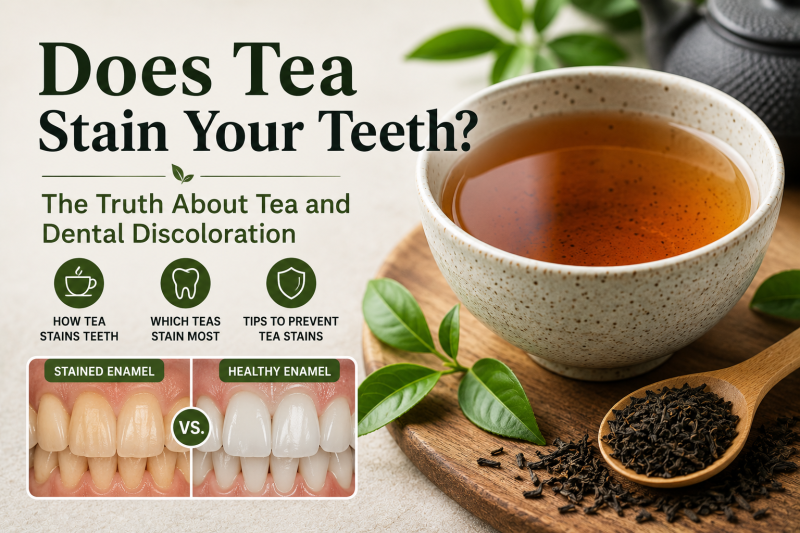
Tea is one of the world’s most beloved beverages, valued for its calming rituals, rich traditions, and potential health benefits. But many tea drinkers eventually wonder:
Does tea stain your teeth?
The short answer is yes … tea can contribute to dental discoloration over time. However, not all teas stain equally, and there are several ways to reduce staining while still enjoying your daily tea ritual.
In this guide, we’ll explore why tea stains teeth, which teas are most likely to cause discoloration, how tea compares to coffee and wine, and practical tips for preventing stains while maintaining healthy teeth.
Quick Navigation
Why Does Tea Stain Teeth?
Tea contains natural compounds called tannins, a type of polyphenol that can attach to tooth enamel and gradually cause discoloration.
Tannins:
- Increase pigment adhesion
- Encourage staining particles to stick to teeth
- Are more concentrated in darker teas
Over time, repeated exposure may lead to:
- Yellowing
- Brownish discoloration
- Surface staining on enamel
This doesn’t mean tea is harmful to your teeth, but frequent consumption (especially without proper oral care) can affect the brightness of your smile.
Which Types of Tea Stain Teeth the Most?
Not all teas have the same staining potential.
Black Tea
Black tea is generally considered the most likely tea to stain teeth.
Why?
- Highest tannin concentration
- Dark pigmentation
- Strong oxidation process
Popular black teas include:
- English Breakfast
- Earl Grey
- Assam
- Darjeeling
Green Tea
Green tea stains less than black tea but can still contribute to discoloration over time.
Interestingly, green tea may leave:
- Grayish tones
- Duller enamel appearance
However, green tea is generally lower in tannins than black tea.
TeaMinded’s article on what makes Japanese tea different also explains how Japanese green tea cultivation affects flavor, color, and tea chemistry.
Herbal Tea
Many herbal teas stain less because they contain fewer tannins.
However, highly pigmented herbal teas such as:
- Hibiscus
- Rooibos
- Berry blends
may still contribute to staining.
White Tea
White tea is often the least staining traditional tea because it undergoes minimal oxidation.
Is Tea Worse Than Coffee for Teeth Staining?
Surprisingly, many dentists say tea can stain teeth more than coffee.
Why?
- Tea often contains more tannins
- Tea pigments cling strongly to enamel
- Frequent sipping extends exposure time
However, coffee:
- Is more acidic
- Can weaken enamel over time
- Often creates darker stains faster
The reality is that both beverages can stain teeth if consumed frequently.
Does Tea Damage Tooth Enamel?
Most traditional teas are not highly damaging to enamel on their own.
However, several factors matter:
- Acidity
- Sugar content
- Frequency of drinking
- Oral hygiene habits
Unsweetened tea is generally considered much healthier for teeth than sugary sodas or energy drinks.
According to American Dental Association, maintaining good oral hygiene and limiting sugar exposure are among the most important factors in protecting tooth enamel.
Factors That Increase Tea Staining
1. Frequent Sipping
Longer exposure increases staining risk.
2. Strong Tea Concentration
Heavily steeped tea contains more tannins.
3. Poor Oral Hygiene
Plaque buildup makes stains cling more easily.
4. Existing Enamel Wear
Thin enamel reveals darker dentin beneath.
5. Sugary Tea Drinks
Sugar contributes to plaque and enamel issues.
How to Prevent Tea Stains on Teeth
Fortunately, there are many ways to reduce staining without giving up tea.
Rinse Your Mouth with Water
A quick rinse after drinking tea helps wash away tannins.
Avoid Sipping Tea All Day
Continuous exposure increases staining.
Use a Straw for Iced Tea
This reduces direct contact with teeth.
Practice Good Oral Hygiene
Brush and floss regularly.
Use Whitening Toothpaste Carefully
Gentle whitening products may help reduce surface stains.
Wait Before Brushing
After acidic drinks, wait about 30 minutes before brushing to protect enamel.
Can Professional Whitening Remove Tea Stains?
Yes — most tea stains are considered surface stains and respond well to:
- Professional whitening
- Whitening strips
- Whitening toothpaste
- Dental cleanings
However, severe or long-term discoloration may require professional treatment.
Should You Stop Drinking Tea?
For most people, absolutely not.
Tea offers many potential wellness benefits and remains one of the healthiest beverage choices available — especially when consumed without excessive sugar.
Tea also supports:
- Relaxation
- Mindfulness
- Hydration
- Antioxidant intake
- Intentional daily rituals
TeaMinded’s article on how to make matcha taste good explores ways to enjoy tea more intentionally while appreciating flavor and preparation techniques.
Tea, Matcha, and Staining
Matcha deserves special mention because it differs from regular steeped tea.
Since matcha involves consuming the entire powdered leaf:
- It contains chlorophyll pigments
- It may leave mild staining
- But usually less dark staining than black tea
Ceremonial-grade matcha is also often consumed more slowly and mindfully, which may encourage better oral habits overall.
Final Thoughts
So, does tea stain your teeth?
Yes — especially darker teas like black tea that contain higher concentrations of tannins. But staining varies depending on the type of tea, how often you drink it, and your oral hygiene habits.
The good news is that most tea stains are manageable and preventable with simple habits like rinsing with water, brushing regularly, and limiting prolonged exposure.
For most tea lovers, the benefits and enjoyment of tea far outweigh the cosmetic concerns — especially when tea becomes part of a slower, more intentional daily ritual.

Scott is the founder of TeaMinded. He enjoys tasting and discovering teas from across the globe, with green teas and ceremonial matcha from Japan being among his favorites. He’s grateful to be immersed in the tea community, always learning and sharing along the journey.