
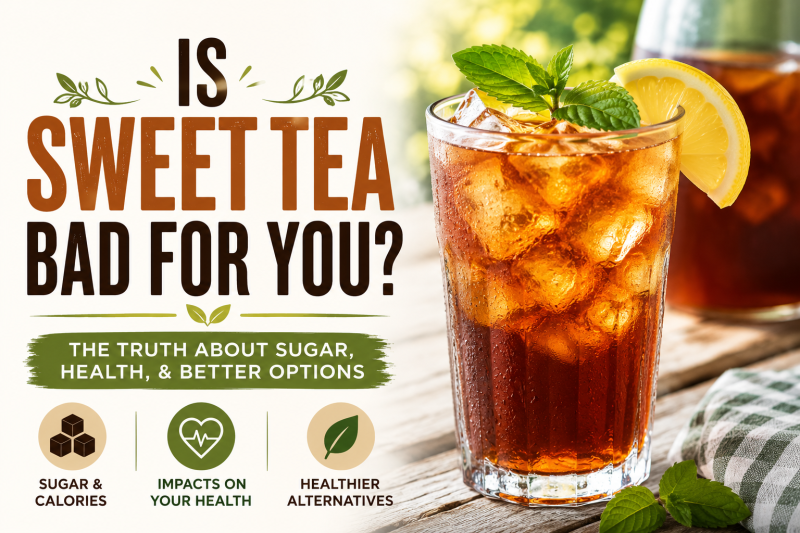
Sweet tea is a beloved beverage throughout the American South and beyond. Refreshing, flavorful, and often served over ice, it has become a staple at family gatherings, restaurants, and summer barbecues.
But as awareness grows around sugar consumption and healthy lifestyles, many people are asking an important question:
Is sweet tea bad for you?
The answer depends largely on how much you drink, how it is prepared, and what role it plays in your overall diet. While tea itself offers several health benefits, the large amounts of added sugar found in traditional sweet tea can change the equation considerably.
In this guide, we’ll explore the nutritional impact of sweet tea, how it compares to other beverages, and healthier alternatives for tea lovers.
Quick Navigation
What Is Sweet Tea?
Sweet tea is traditionally made by brewing black tea and dissolving sugar into the tea while it is still hot. The tea is then chilled and served over ice.
Traditional sweet tea contains three primary ingredients:
- Tea leaves
- Water
- Sugar
While recipes vary, many versions contain significant amounts of added sugar, often making sweet tea much sweeter than most other tea beverages.

The Good News: Tea Itself Is Healthy
Before discussing sugar, it’s important to remember that tea itself is generally considered a healthy beverage.
Black tea naturally contains:
- Antioxidants
- Polyphenols
- Flavonoids
- Beneficial plant compounds
Research suggests tea consumption may support:
- Heart health
- Cognitive function
- Hydration
- Overall wellness
If you’re interested in learning more about tea’s natural benefits, you may enjoy our article on Benefits of Drinking Green Tea Before Bed.
Why Sweet Tea Can Become Unhealthy
The primary concern with sweet tea isn’t the tea — it’s the sugar.
Many restaurant-sized servings contain:
- 25–50 grams of sugar
- 100–250 calories
- More added sugar than many people realize
According to the American Heart Association, women should generally limit added sugar to about 25 grams per day, while men should aim for no more than 36 grams per day.
A single large glass of sweet tea can exceed these recommendations.
Sweet Tea and Blood Sugar
One of the biggest concerns surrounding sweet tea is its effect on blood sugar levels.
When consumed, the added sugar is rapidly absorbed into the bloodstream, causing:
- Blood sugar spikes
- Increased insulin response
- Potential energy crashes later
For individuals with diabetes, prediabetes, or insulin resistance, regular sweet tea consumption may make blood sugar management more difficult.
Sweet Tea and Weight Gain
Liquid calories are easy to consume without creating a strong feeling of fullness.
A large glass of sweet tea may contain:
| Beverage | Approximate Calories |
|---|---|
| Unsweetened tea | 0–5 |
| Sweet tea | 100–250 |
| Soda | 140–200 |
Regularly consuming high-calorie beverages can contribute to:
- Weight gain
- Increased calorie intake
- Difficulty maintaining a calorie deficit
While occasional sweet tea is unlikely to cause problems, daily consumption can add up over time.
Sweet Tea and Dental Health
Another consideration is oral health.
The combination of:
- Sugar
- Acidity
- Frequent sipping
can contribute to:
- Tooth decay
- Enamel erosion
- Increased cavity risk
Many dentists recommend limiting sugary beverages and drinking water afterward when possible.

Is Sweet Tea Better Than Soda?
In many cases, yes.
Sweet tea typically contains:
- Less sugar than some sodas
- Tea antioxidants
- Fewer artificial ingredients
However, many sweet teas still contain enough sugar to significantly impact calorie intake and blood sugar levels.
Think of sweet tea as potentially less unhealthy than soda rather than automatically healthy.
Healthier Alternatives to Sweet Tea
If you love sweet tea but want a healthier option, consider:
1. Unsweetened Tea
Many tea drinkers gradually adapt to unsweetened tea and begin appreciating the natural flavors of the leaves.
2. Lightly Sweetened Tea
Reduce sugar slowly over time to retrain your palate.
3. Natural Sweeteners
Some people prefer:
- Honey
- Stevia
- Monk fruit
- Maple syrup
While still requiring moderation, these may help reduce overall sugar consumption.
4. Explore Specialty Teas
Higher-quality teas often have naturally sweet flavor notes without added sugar.
For beginners exploring better tea experiences, our guide A Beginner’s Guide to Loose Leaf Tea is a great place to start.
What About Artificial Sweeteners?
Many bottled sweet teas now use low-calorie sweeteners.
While this reduces calories and sugar, research continues regarding long-term health effects and individual responses.
For balanced information on added sugars and beverage choices, the Harvard T.H. Chan School of Public Health – Sugary Drinks Guide offers an excellent overview.
The Bottom Line
Is sweet tea bad for you?
Not necessarily.
An occasional glass of sweet tea can absolutely fit into a healthy lifestyle.
The concern arises when sweet tea becomes a major source of added sugar on a daily basis.
For most people, the healthiest approach is:
- Enjoy sweet tea occasionally
- Reduce added sugar when possible
- Explore unsweetened or lightly sweetened options
- Focus on high-quality tea rather than high amounts of sweetener
That way, you can continue enjoying tea’s rich flavors and traditions while supporting your long-term health.

Scott is the founder of TeaMinded. He enjoys tasting and discovering teas from across the globe, with green teas and ceremonial matcha from Japan being among his favorites. He’s grateful to be immersed in the tea community, always learning and sharing along the journey.