
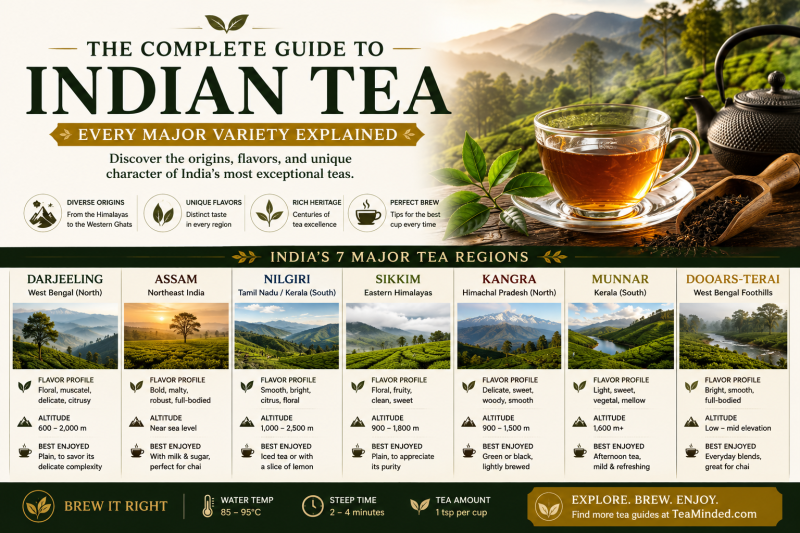
India is the second-largest tea producer in the world — and one of the most diverse. From the misty Himalayan foothills of Darjeeling to the humid lowland valleys of Assam and the blue mountains of southern India, each region produces a tea with a completely distinct character. This guide walks you through every major Indian tea variety, side by side, so you can find exactly what suits your palate.
Quick Navigation
Why Indian Tea Is So Diverse
India’s tea-growing regions span an enormous range of climates, altitudes, and soil types — from sea-level tropical plains to mountain elevations above 2,000 meters. That geographical diversity is precisely what makes Indian tea so rich and varied.
The country has seven officially recognized tea-producing regions, each with its own flavor signature, processing traditions, and cultural identity. Some, like Assam and Darjeeling, are famous worldwide. Others, like Kangra and Sikkim, are lesser-known hidden gems that reward the curious tea drinker with something genuinely special.
India also produces tea using two distinct processing methods that cut across all regions:
- Orthodox method — whole leaves are hand-processed through withering, rolling, oxidizing, and drying. Produces complex, nuanced teas.
- CTC method (Crush, Tear, Curl) — leaves are machine-processed into small pellets that brew quickly and boldly. Ideal for milk teas and chai.
Already a Darjeeling fan? Our Complete Guide to Darjeeling Tea on TeaMinded covers flushes, grades, brewing, and buying tips in full detail.
At a Glance: Indian Tea Regions Compared
| Region | Location | Altitude | Flavor Profile | Best For |
|---|---|---|---|---|
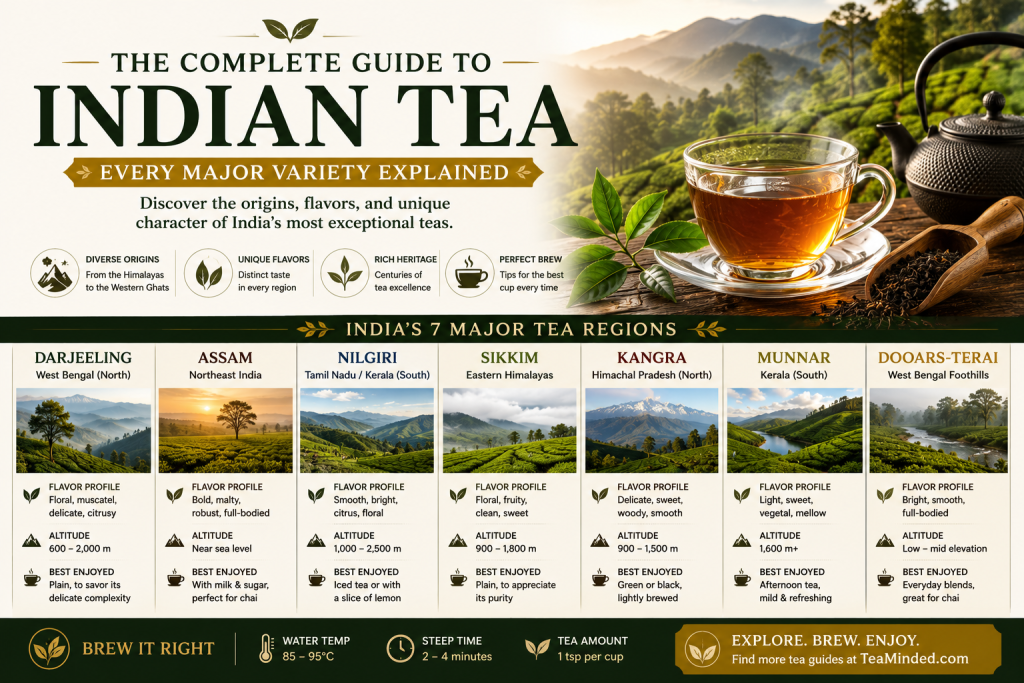
| Darjeeling | West Bengal (North) | 600–2,000m | Floral, muscatel, delicate | Sipping plain, special occasions |
| Assam | Northeast India | Low (river valley) | Bold, malty, robust | Breakfast tea, chai, with milk |
| Nilgiri | Tamil Nadu / Kerala (South) | 1,000–2,500m | Smooth, bright, citrus-floral | Iced tea, everyday drinking |
| Sikkim | Eastern Himalayas | 900–1,800m | Floral, fruity, clean | Sipping plain, gifting |
| Kangra | Himachal Pradesh (North) | 900–1,500m | Delicate, sweet, woody | Green tea lovers, explorers |
| Munnar | Kerala (South) | 1,600m+ | Light, sweet, vegetal | Afternoon tea, mild blends |
| Dooars-Terai | West Bengal foothills | Low–mid | Bright, smooth, full-bodied | Everyday blends, chai |
Darjeeling Tea — The Champagne of Teas
Region: Darjeeling district, West Bengal | Altitude: 600–2,000m | GI Protected: Yes
Darjeeling is the most internationally celebrated of all Indian teas. Grown in the Himalayan foothills with cool temperatures, misty mornings, and well-drained mountain soil, its terroir has earned it the same legal protection as Champagne wine. More than 90% of Darjeeling teas are not fully oxidized, making them technically closer to oolong than black tea.
Tasting notes: Floral, muscatel, citrus, musky spice, mild astringency
Best enjoyed: Without milk or sugar at 85–90°C. Anything added obscures the subtle complexity that makes Darjeeling worth its price.
Who it’s for: Tea connoisseurs, gift-givers, anyone who wants to understand what the fuss about “fine tea” is really about.
Assam Tea — The Bold Backbone of British Tea
Region: Assam state, northeastern India | Altitude: Near sea level | GI Protected: Yes
Assam, located in Northeast India along the Brahmaputra River valley, is the world’s largest tea-growing region. It is the backbone of most English Breakfast and Irish Breakfast blends, and the default tea of daily life across the Indian subcontinent. Assam teas are renowned for their bold character, malty depth, and invigorating strength, presenting a rich, full-bodied brew with a distinct reddish-brown hue, often featuring hints of honey, spice, and earthiness. BrewsoulteaShanti Tea
Tasting notes: Malty, robust, honey, earthy, spiced warmth
Best enjoyed: With milk and sugar — the natural choice for masala chai. Its boldness handles additions that would overwhelm a more delicate tea.
Who it’s for: Those who want a reliable, invigorating everyday tea, especially anyone who finds lighter teas too subtle.
Nilgiri Tea — The Underrated Gem of the South
Region: Blue Mountains, Tamil Nadu / Kerala / Karnataka | Altitude: 1,000–2,500m | GI Protected: Yes
From the mist-covered Blue Mountains of southern India, Nilgiri tea is an elegant and versatile black tea grown at higher altitudes, offering a smooth, medium-bodied experience with refreshing notes of citrus or delicate floral nuances. Because they do not cloud when chilled, Nilgiri teas are perfect for iced teas and refreshing beverages. Nilgiri sits between Assam’s boldness and Darjeeling’s delicacy — a well-balanced middle ground. Shanti Tea
Tasting notes: Citrus, light floral, clean briskness, smooth finish
Best enjoyed: Iced, cold-brewed, or hot with a slice of lemon. Orthodox Nilgiri teas are gaining recognition for their quality and are often compared favorably to Ceylon teas from Sri Lanka. Brewsoultea
Who it’s for: Everyday tea drinkers, iced tea lovers, those who find Assam too heavy and Darjeeling too delicate.
Sikkim Tea — Himalayan Organic Excellence
Region: Sikkim state, eastern Himalayas | Altitude: 900–1,800m | GI Protected: Yes
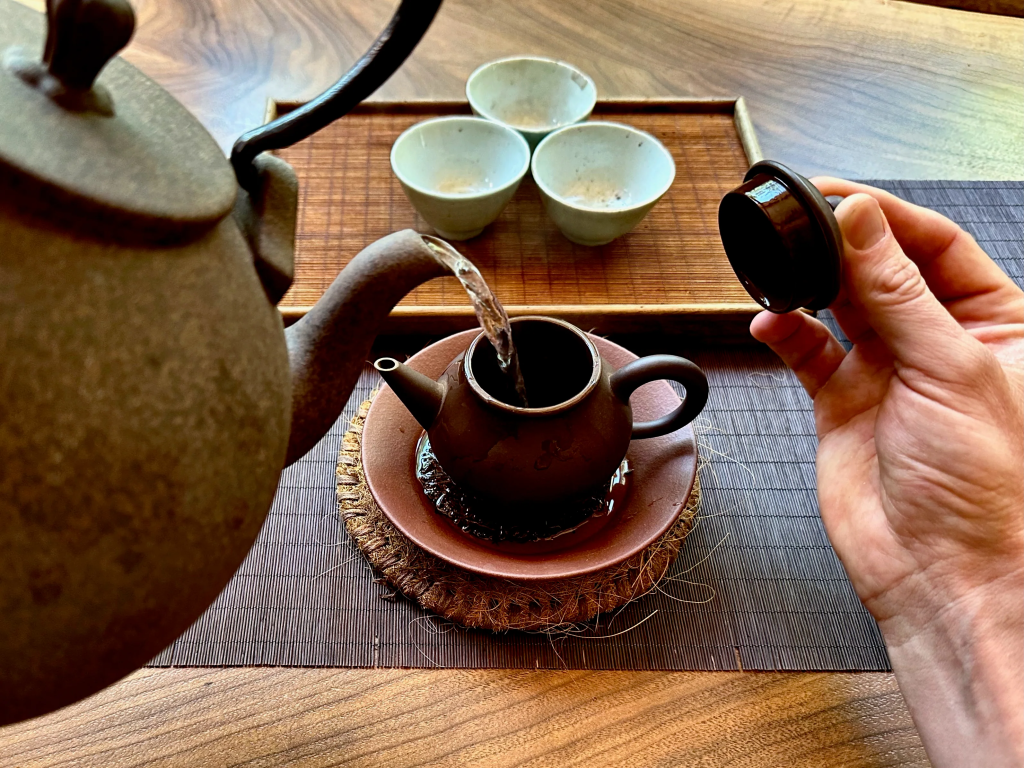
Sikkim is India’s smallest tea-producing state, but produces some of the most sought-after organic teas. The entire state is certified organic — Sikkim became India’s first fully organic state in 2016. Teas from Temi Tea Estate, Sikkim’s only major estate, are particularly prized for their clean, bright character and limited production. Brew Your Sip
Tasting notes: Floral, fruity, clean, hint of sweetness, bright amber color
Best enjoyed: Without milk, brewed at 85–90°C. Temi Estate teas are produced in small quantities and worth seeking out as a premium gift or personal indulgence.
Who it’s for: Darjeeling lovers wanting something organically certified; health-conscious drinkers; those seeking rare Indian tea.
Kangra Tea — The Himalayan Hidden Gem
Region: Kangra Valley, Himachal Pradesh | Altitude: 900–1,500m | GI Protected: Yes (since 2005)
Kangra is one of India’s best-kept tea secrets. Kangra teas are light-bodied and mildly astringent, with a delicate, slightly sweet character. Production is small and the teas are largely consumed regionally — making them a hidden gem for tea enthusiasts who seek them out. The Chinese-variety plant grown here produces such a pale liquor that Kangra does not produce any CTC tea — the staple tea of India — making it exclusively an orthodox tea region. Brew Your SipWikipedia
Tasting notes: Delicate, sweet, floral, woody (green), light astringency
Best enjoyed: Black Kangra at 85–90°C for 2–3 minutes; green Kangra at 75–80°C for 1.5–2 minutes. Best without milk.
Who it’s for: Green tea lovers wanting an Indian alternative; those who find Darjeeling slightly assertive but want something from the same delicate flavor family.
Munnar Tea — The Scenic Teas of Kerala
Region: Munnar, Western Ghats, Kerala | Altitude: 1,600m+ | GI Protected: No
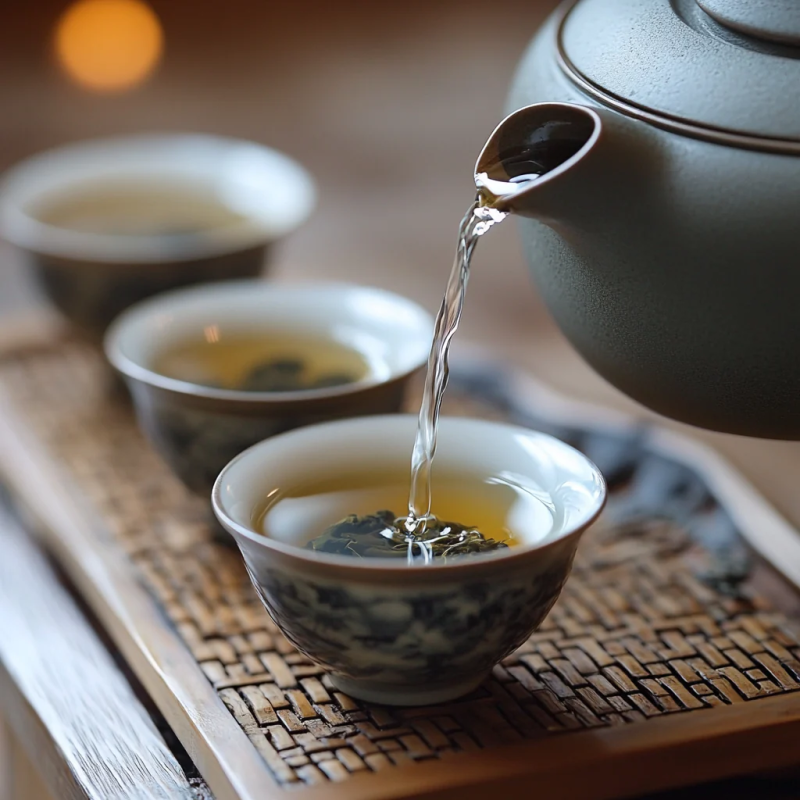
Munnar’s high altitude, cool temperatures, and abundant rainfall make it a uniquely productive southern growing region. Munnar teas are light and sweet with gentle vegetal notes, ideal for those who prefer a softer flavor profile. The Munnar green tea is mellow and grassy, with a refreshing finish, while the black tea is often mild and sweet with a soft, almost creamy mouthfeel.
Tasting notes: Light, sweet, smooth, mild vegetal, refreshing
Best enjoyed: As a gentle everyday tea, hot or iced. A good entry point for those new to loose-leaf Indian teas.
Who it’s for: Those who prefer subtle, easy-drinking teas without strong astringency or bitterness.
Dooars-Terai Tea — The Volume Workhorse
Region: West Bengal foothills | Altitude: Low to mid elevation | GI Protected: No
The Dooars-Terai region doesn’t carry prestige, but it accounts for roughly 20% of India’s total tea production across approximately 300 tea estates — keeping the world’s tea bags full. Bordering Bhutan and situated in the foothills of Darjeeling, the Dooars-Terai region is known for its bright, smooth, and full-bodied teas, mostly in the form of CTC black tea. Dolshyne
Tasting notes: Bright, smooth, clean, mild earthiness
Best enjoyed: With milk, in blends, or as an everyday chai base.

The Essential Three-Way Comparison: Darjeeling vs. Assam vs. Nilgiri
| Darjeeling | Assam | Nilgiri | |
|---|---|---|---|
| Strength | Light | Bold | Medium |
| With milk? | No | Yes | Optional |
| Iced tea? | Not ideal | Good | Excellent |
| Complexity | Very high | Moderate | Moderate |
| Price | Premium | Affordable | Mid-range |
| Best time of day | Afternoon | Morning | Any time |
Which Indian Tea Should You Try First?
- If you drink with milk: Start with a single-estate orthodox Assam — a revelation compared to tea-bag versions.
- If you prefer tea without milk: Start with Darjeeling second flush. The muscatel flavor is unlike anything else.
- If you love iced tea: Start with Nilgiri, cold-brewed overnight with a slice of lemon.
- If you care about organic: Seek out Sikkim Temi Estate tea.
- If you’re a green tea lover: Try Kangra green as your Indian entry point.
- If you want something gentle and unfussy: Munnar makes a lovely, low-key everyday cup.
For a deep dive into brewing temperatures, steeping times, and everything that affects how your cup tastes, visit our Tea Steeping Guide on TeaMinded.
Frequently Asked Questions About Indian Tea Varieties
What is the most popular tea in India? Domestically, Assam CTC tea — brewed with milk, sugar, and spices as masala chai — is by far the most consumed. Internationally, Darjeeling is the most famous and prestigious Indian tea.
Is all Indian tea black tea? No. While black tea dominates production, India also produces green, white, and oolong teas — particularly in Darjeeling, Kangra, and Nilgiri.
What does GI protection mean for Indian tea? A Geographical Indication tag means the tea can only be legally sold under that regional name if it was grown and produced in the designated area — the same protection enjoyed by Champagne wine in France. Darjeeling, Assam, Nilgiri, Kangra, and Sikkim all hold GI tags.
Which Indian tea has the most caffeine? Assam generally has the highest caffeine content, owing to its bold, fully oxidized processing and the naturally high-caffeine assamica leaf variety.
Can I visit Indian tea gardens? Yes — many estates in Darjeeling, Assam, Nilgiri, and Munnar welcome visitors. The Tea Board of India maintains resources on registered estates and regions.
Conclusion
Indian tea is not a single thing — it is a continent’s worth of flavor, history, and geography compressed into a leaf. Assam wakes you up. Darjeeling rewards patience. Nilgiri refreshes without demanding your full attention. Sikkim surprises with its cleanliness and rarity. Kangra rewards the curious. Munnar soothes.
Start with one, brew it properly, and let the region speak for itself. India has been growing extraordinary tea for nearly two centuries — it deserves more than a tea bag and thirty seconds.
Published by TeaMinded | Your trusted resource for tea education, reviews, and culture

Scott is the founder of TeaMinded. He enjoys tasting and discovering teas from across the globe, with green teas and ceremonial matcha from Japan being among his favorites. He’s grateful to be immersed in the tea community, always learning and sharing along the journey.