

Many people think of green tea as a morning or afternoon drink, but drinking green tea before bed may actually provide several wellness benefits. From promoting relaxation to supporting heart health, green tea can become a calming evening ritual that supports both sleep and overall health.
The key is understanding how green tea works, when to drink it, and which varieties are best before bedtime.
In this guide, we’ll explore the benefits of drinking green tea before bed, potential downsides, and how to make it part of a healthy nighttime routine.
Quick Navigation
Can You Drink Green Tea Before Bed?
Yes — many people enjoy green tea before bed because it contains calming compounds that may help reduce stress and support relaxation.
Unlike coffee, green tea contains:
- Lower amounts of caffeine
- L-theanine, a calming amino acid
- Antioxidants and polyphenols
- Natural plant compounds that support overall wellness
While some people are sensitive to caffeine at night, others find green tea helps create a peaceful bedtime ritual.
If you enjoy Japanese tea culture, you may also like our article on What Makes Japanese Tea Different? which explores the calming traditions surrounding Japanese teas.

1. Green Tea May Help Promote Relaxation
One of the biggest benefits of drinking green tea before bed is the presence of L-theanine.
L-theanine is an amino acid naturally found in green tea that has been studied for its calming effects. Research suggests it may help:
- Reduce stress
- Promote relaxation
- Improve mental clarity
- Support better sleep quality
Unlike sedatives, L-theanine promotes a calm but alert state, helping many people unwind without feeling groggy.
The Sleep Foundation</a> also notes that calming beverages and bedtime rituals can positively influence sleep quality.
2. Green Tea Contains Powerful Antioxidants
Green tea is rich in antioxidants called catechins, particularly EGCG (epigallocatechin gallate).
These antioxidants help protect the body from oxidative stress and cellular damage.
Potential antioxidant benefits include:
- Supporting heart health
- Reducing inflammation
- Supporting immune function
- Helping protect cells from free radicals
Because green tea is minimally processed, it retains many of its natural beneficial compounds.
3. Green Tea May Support Better Sleep Quality
Although green tea contains caffeine, it has significantly less than coffee.
A typical cup of green tea contains:
- 20–45mg caffeine
- compared to 90–120mg in coffee
For many people, this lower caffeine content combined with L-theanine creates a more balanced and calming experience.
Some tea drinkers find that sipping warm green tea at night helps:
- establish a bedtime routine,
- reduce evening stress,
- and encourage relaxation before sleep.
If caffeine sensitivity is a concern, consider:
- decaffeinated green tea,
- hojicha,
- or low-caffeine Japanese green teas.
4. Green Tea May Support Weight Management
Green tea is frequently associated with metabolism and weight management support.
Research suggests green tea may help:
- support fat oxidation,
- increase metabolic activity,
- and reduce late-night snacking when used as a replacement for sugary beverages.
While green tea alone is not a magic solution for weight loss, it can support healthier nighttime habits.
For readers exploring healthier tea lifestyles, our guide to Loose Leaf Tea for Beginners offers a helpful introduction to higher-quality tea experiences.
5. Green Tea May Support Brain Function
Green tea contains a unique balance of:
- caffeine,
- L-theanine,
- and antioxidants
that may help support cognitive function and mental clarity.
Studies suggest this combination may:
- improve focus,
- reduce mental fatigue,
- support memory,
- and promote calm concentration.
Unlike the jittery feeling some experience from coffee, green tea often provides smoother energy.
6. Green Tea Supports a Healthy Evening Ritual
Sometimes the greatest benefit of green tea before bed is simply the ritual itself.
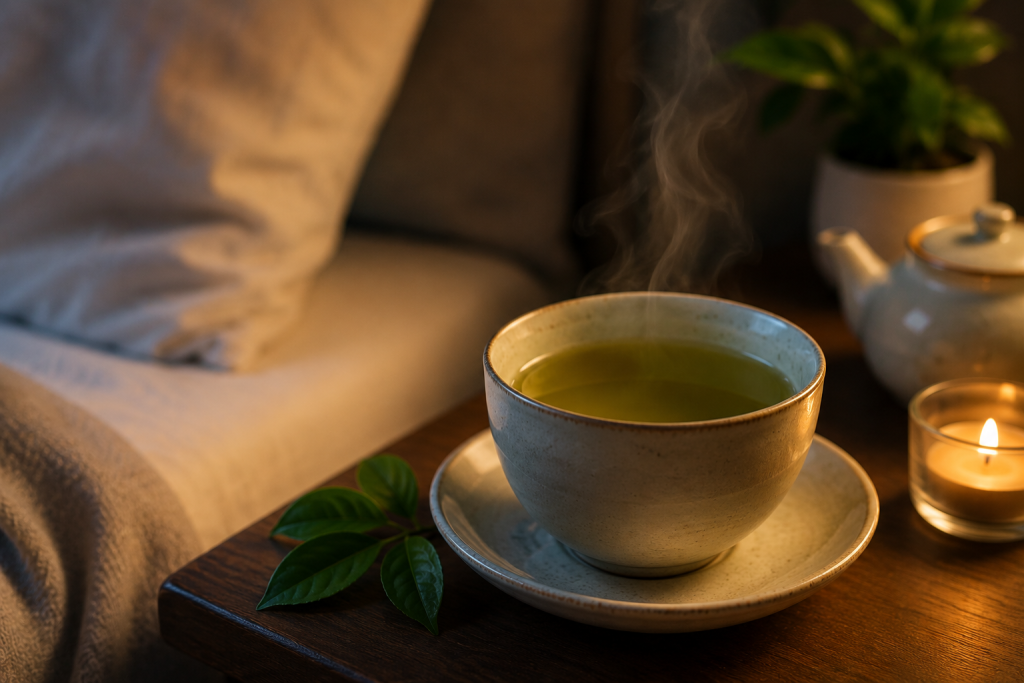
Preparing tea slowly at the end of the day can:
- reduce screen time,
- encourage mindfulness,
- create intentional quiet,
- and help transition from work into rest.
Tea rituals have long been associated with calmness and reflection across many cultures, especially within Japanese tea traditions.
Potential Downsides of Drinking Green Tea Before Bed
While green tea offers many benefits, it may not work for everyone.
Caffeine Sensitivity
If you are highly sensitive to caffeine, even small amounts may affect sleep.
Try:
- decaf green tea,
- lower-caffeine varieties,
- or drinking tea earlier in the evening.
Increased Nighttime Urination
Drinking large amounts of fluid before bed may increase nighttime bathroom trips.
Iron Absorption
Green tea may slightly reduce iron absorption if consumed with meals. If iron deficiency is a concern, avoid drinking tea directly with iron-rich foods.
Best Green Teas to Drink Before Bed
Some green teas are better suited for evening relaxation than others.
Good evening options include:
- Hojicha
- Kukicha
- Genmaicha
- Decaf green tea
- Low-caffeine sencha
Hojicha is especially popular before bed because roasting reduces much of its caffeine while creating a warm, comforting flavor.
Final Thoughts
Drinking green tea before bed can offer more than just hydration. From promoting relaxation and mindfulness to supporting antioxidants and overall wellness, green tea can become a healthy and calming nighttime ritual.
The key is choosing the right tea and paying attention to how your body responds to caffeine in the evening.
For many tea lovers, an evening cup of green tea becomes less about stimulation — and more about slowing down, reflecting, and preparing for restful sleep.

Scott is the founder of TeaMinded. He enjoys tasting and discovering teas from across the globe, with green teas and ceremonial matcha from Japan being among his favorites. He’s grateful to be immersed in the tea community, always learning and sharing along the journey.